social media
The scoop on social media for influencers, lobbyists, budding politicians and civilians with a stake in the Swamp's trending issues.
The Smell of Fuzz. AI-Generated.
There is a smell that doesn’t come from flowers or rain or burning wood. It doesn’t rise from kitchens or factories or forests. It isn’t visible, yet everyone recognizes it the moment it appears. It hangs heavy in the air, sharp and unmistakable. It tightens the chest, slows the steps, and makes conversations suddenly quieter. People call it many things. Oppression. Surveillance. Fear. But on the street, in whispers and jokes, it has another name. The smell of fuzz. This smell appears long before sirens wail or boots hit the ground. It shows up before questions are asked, before doors are knocked, before anyone says, “You’re under arrest.” It’s the invisible signal that authority is nearby — watching, listening, waiting. And once you learn to recognize it, you never forget it. What Does “The Smell of Fuzz” Really Mean? At its simplest, “the fuzz” is slang for law enforcement. But the smell of fuzz isn’t about police cars or uniforms. It’s about presence without permission. It’s the feeling that someone else controls the space you’re standing in. You feel it when: A peaceful protest suddenly goes quiet Conversations lower their volume mid-sentence People instinctively check their phones, bags, and pockets Jokes stop being funny The smell of fuzz isn’t always tied to wrongdoing. Often, no crime is being committed at all. That’s what makes it powerful — and unsettling. It’s not about guilt. It’s about power. Fear Has a Scent Humans have evolved to detect danger without seeing it. Long before laws and governments, our ancestors learned to sense predators, storms, and threats through subtle changes in their environment. Today, the predator isn’t a wild animal. It’s uncertainty. The smell of fuzz is the modern equivalent of rustling bushes in the dark. Your brain asks the same ancient question: “Am I safe right now?” Even people who respect the law, even those who have never been arrested, feel it. Because fear doesn’t require wrongdoing — it only requires imbalance. Why Silence Follows Authority One of the strangest things about the smell of fuzz is how quickly it changes behavior. Laughter fades. Opinions soften. Truth becomes careful. People don’t stop talking because they are guilty. They stop talking because being misunderstood carries consequences. In many societies, authority doesn’t need to act harshly to be effective. It only needs to be present. The possibility of punishment is often more powerful than punishment itself. That’s why the smell lingers. The Thin Line Between Safety and Control Supporters of strong law enforcement argue — often correctly — that police presence can prevent crime, protect communities, and maintain order. Streets without rules can quickly become dangerous. But there’s a difference between safety and intimidation. Safety feels calm. Control feels tense. When authority reassures, people relax. When authority dominates, people withdraw. The smell of fuzz appears when the balance tilts too far toward control — when protection begins to feel like surveillance. Who Smells It First? Not everyone experiences the smell of fuzz equally. For some, it’s faint. For others, it’s overwhelming. History shows that marginalized communities often smell it first and strongest. People who have been stopped, searched, questioned, or targeted before develop a sharper sensitivity. To them, authority doesn’t represent neutrality. It represents memory. Memory of: Being assumed guilty Being watched without reason Being treated as a suspect before a citizen Once fear has a history, it returns faster. The Smell in the Digital Age Today, the smell of fuzz isn’t limited to streets and crowds. It has entered the digital world. You feel it when: Posts are deleted without explanation Accounts are shadow-banned Messages feel unsafe to send Algorithms quietly decide what is “acceptable” No sirens. No uniforms. No visible force. Yet the silence is the same. Digital authority doesn’t knock on doors — it reshapes reality. It decides what is seen, what is hidden, and what disappears. And yes, it has a smell too. When Protection Becomes Performance There’s another layer to the smell of fuzz: performance. Sometimes authority isn’t present to protect — it’s present to be seen. Riot gear at peaceful gatherings. Armored vehicles on quiet streets. Aggressive postures where none are required. This kind of presence sends a message, intentional or not: “We are in charge. Don’t forget it.” The smell intensifies not because of danger, but because of theatrics. Why People Joke About It Humor is a survival tool. When people joke about “the fuzz,” they’re not being disrespectful — they’re reclaiming a small piece of control. Laughter weakens fear. Nicknames shrink authority to something manageable. But jokes also reveal truth. If authority felt universally fair and humane, it wouldn’t need a slang name whispered under breath. Can the Smell Be Washed Away? Yes — but not easily. The smell of fuzz fades when trust replaces fear. When authority is transparent, accountable, and human, its presence feels different. Trust grows when: Questions are answered, not punished Power is explained, not imposed Mistakes are acknowledged, not denied Communities are partners, not targets When people believe they will be treated fairly, the air changes. Listening Changes the Air The most powerful antidote to the smell of fuzz isn’t force — it’s listening. When authority listens, people speak. When people speak, fear loosens. When fear loosens, trust can grow. Listening doesn’t weaken authority. It legitimizes it. Why This Conversation Matters Some will say: “If you’re not doing anything wrong, you have nothing to fear.” History disagrees. Many of the world’s darkest chapters were written under systems where “doing nothing wrong” offered no protection. Rights exist precisely because innocence alone is not enough. The smell of fuzz reminds us of that truth. The Smell as a Warning System Rather than dismiss it, we should treat the smell of fuzz as a signal — not of criminality, but of imbalance. When people feel watched instead of protected, something needs attention. When silence replaces dialogue, something is broken. Ignoring the smell doesn’t make it disappear. It only makes it stronger. A Different Kind of Presence Imagine authority that smells like: Calm instead of tension Confidence instead of dominance Service instead of control That kind of presence exists in some places. It proves the smell of fuzz is not inevitable — it’s a result of choices. Choices about tone. Choices about power. Choices about humanity. Final Thoughts: Naming the Smell Matters To name something is to acknowledge it. “The smell of fuzz” is more than slang. It’s a shared human experience, a quiet understanding passed through generations. It tells us when power feels heavy and trust feels thin. If we want safer societies, we must aim not just for order — but for dignity. Because the best kind of authority doesn’t announce itself with fear. It walks in quietly… and the air stays easy to breathe.
By Zahid Hussain2 months ago in The Swamp
Increased Calls For Social Media Ban For Under 16's
There has been a growing swell of support towards making it illegal for anyone under the age of sixteen to be able to access and use social media in the UK. This comes as a result of the murder of Brianna Ghey who was killed by two of her fellow classmates at Birchwood Community High School. It is said that Ghey reportedly faced years of transphobic harassment and bullying including when she was at school a part of which was reportedly being gang beaten.
By Ashish Prabhu2 months ago in The Swamp
Luigi Mangione. AI-Generated.
Few criminal cases in recent years have captured public attention quite like that of Luigi Mangione. From the moment prosecutors accused him of a high-profile corporate killing to the unusual wave of public support that followed, the story has continued to evolve. Most recently, headlines were dominated by an unexpected twist — an alleged jailbreak attempt involving a man named Mark Anderson. This article explores the background of Mangione, the legal challenges he faces, the social reaction surrounding his case, and the bizarre circumstances of the so-called Luigi Mangione jailbreak plot. Who Is Luigi Mangione? Luigi Mangione, a young man in his late twenties, became widely known after authorities accused him of fatally shooting UnitedHealthcare CEO Brian Thompson in December 2024. Prosecutors describe the killing as targeted, and Mangione was arrested just days later following an intense search. Mangione has pleaded not guilty to both state and federal murder charges. If convicted, he could face life imprisonment or even the death penalty, making the stakes of the case exceptionally high. His legal proceedings are expected to stretch into mid-2026, with jury selection scheduled for September and multiple court appearances planned beforehand. A Polarizing Public Response What makes the Mangione case particularly unusual is the public reaction. While many see the charges as evidence of a serious crime, others have framed Mangione as a symbol of frustration with the healthcare industry. Supporters have donated significant funds to his defense and appeared at court hearings, reflecting a broader debate about healthcare costs and corporate accountability in the United States. This divided perception illustrates how criminal trials can sometimes become cultural flashpoints. Instead of remaining confined to courtrooms, they spill into public discourse, where competing narratives shape how the accused is viewed. The Alleged Luigi Mangione Jailbreak Attempt The story took a dramatic turn when Mark Anderson, a 36-year-old man from Minnesota, was arrested after allegedly impersonating an FBI agent in an attempt to free Mangione from the Metropolitan Detention Center in Brooklyn. According to investigators, Anderson approached jail officers claiming he possessed paperwork signed by a judge authorizing the inmate’s release. When asked for credentials, he reportedly presented a Minnesota driver’s license instead. Authorities later searched his backpack and found what he described as weapons — a barbecue fork and a circular steel blade resembling a pizza cutter. Officials quickly detained Anderson and charged him with impersonating a federal agent. Although the criminal complaint did not initially name the intended inmate, law-enforcement sources confirmed that Mangione was the person Anderson allegedly sought to release. Motive Remains Unclear Investigators have not publicly established why Anderson attempted the act. Some reports suggest Mangione has attracted sympathy from individuals critical of the health insurance system, but authorities have not confirmed whether ideology played a role in the incident. Anderson had reportedly traveled to New York for a job opportunity that fell through and was working at a pizzeria before his arrest. The detention center where Mangione is held has housed high-profile inmates in the past and is not known for successful escape attempts, underscoring how unusual the situation was. Legal Complexities Ahead Mangione’s case involves both state and federal jurisdictions, which could complicate the timeline. Even if one trial concludes, appeals or additional proceedings may follow. Prosecutors are reportedly seeking severe penalties, while the defense continues to challenge aspects of the charges. Cases of this magnitude often extend for years, especially when they include potential capital punishment. The judicial process — from pretrial motions to jury selection — is designed to ensure fairness, but it can also prolong uncertainty for everyone involved. Media Attention and Modern Criminal Narratives The Mangione story highlights how modern media ecosystems amplify criminal cases. Continuous coverage, online debates, and grassroots campaigns can transform defendants into widely recognized figures long before a verdict is reached. This phenomenon raises important questions: How does public opinion influence the atmosphere around a trial? Can widespread support or condemnation affect perceptions of justice? Where should the line be drawn between public interest and sensationalism? While courts operate independently, the surrounding narrative often shapes how society interprets a case. Security and Institutional Trust The alleged Mangione jailbreak attempt also points to broader concerns about institutional security. Even though the impersonation was quickly detected, the incident demonstrates how authority symbols — badges, documents, official language — can be misused. Correctional facilities rely heavily on verification procedures, and this event illustrates why such protocols remain essential. The Human Dimension Beyond headlines and legal arguments lies a deeply human story — one involving loss, accusation, and uncertainty. For the victim’s family, the trial represents a search for justice. For Mangione, it is a fight to prove his innocence in court. Meanwhile, episodes like the Anderson incident reveal how emotionally charged criminal cases can inspire unexpected actions from outsiders. What Comes Next for Mangione? Mangione remains in federal custody as the judicial process moves forward. Judges will continue addressing pretrial matters, and both sides are expected to prepare extensively for what could become one of the more closely watched trials of the coming years. The outcome will ultimately depend on evidence presented in court — not public opinion, speculation, or dramatic incidents. Conclusion The case of Luigi Mangione sits at the intersection of crime, public sentiment, and media scrutiny. The alleged involvement of Mark Anderson in a failed escape attempt added an almost surreal chapter to an already high-profile legal battle. Yet beneath the unusual details lies a familiar principle: justice unfolds through due process. Courts — not headlines — will determine Mangione’s fate. As the story continues to develop, it serves as a reminder of how modern criminal cases extend far beyond the courtroom, reflecting broader social tensions and the enduring importance of the rule of law.
By Saboor Brohi 2 months ago in The Swamp
As Spain Mourns Train Crash Victims, Investigators Focus on Track. AI-Generated.
Spain is in shock. A high-speed train collision near Adamuz, Córdoba has claimed at least 40 lives and injured over 120 people, marking one of the deadliest rail disasters in recent European history. Families, communities, and an entire nation are grappling with grief, while investigators scramble to find answers.
By Aqib Hussain2 months ago in The Swamp
Where Have The Opportunities Gone?
I’m a little jealous of my grandfather. He lived in a time where so few people could read or write that just being literate afforded him a civil servant job for life. The same job inherited by my father. But that same job was out of reach to me, despite not only being literate as well but, unlike my literal forefathers, also tech-literate with a bachelor’s degree. Even my father was confused why a position offered to him, through virtue of nepotism, wasn’t open to me. This anecdote is symptomatic of a downward trend; the loss of opportunities.
By Conor Matthews2 months ago in The Swamp
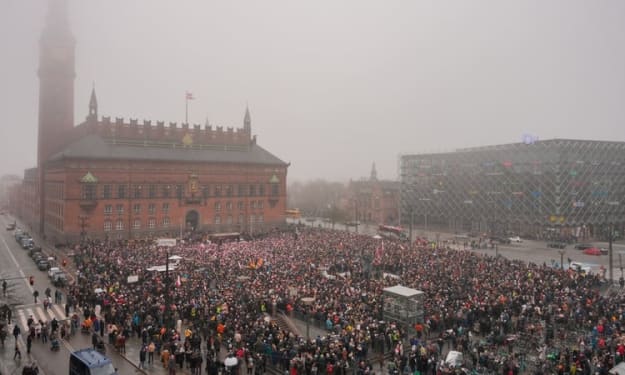
Protests in Greenland and Denmark Against Trump Plans. AI-Generated.
In recent days, a powerful wave of protests has swept through Greenland and Denmark, uniting people from Nuuk to Copenhagen in opposition to U.S. President Donald Trump’s controversial plans regarding Greenland — an autonomous territory of the Kingdom of Denmark. These demonstrations, grounded in concerns about sovereignty, international law, and cultural identity, have underscored deep local unease over external pressure and potential geopolitical shifts in the Arctic. At the heart of the unrest is Trump’s repeated public push for the United States to assert control over Greenland, a vast island rich in mineral resources and strategically positioned at the gateway to the Arctic. Trump’s statements, which include hints at annexation and threats of tariffs on European nations that oppose his agenda, have struck a nerve across the North Atlantic region and beyond. Rising Tensions and Political Backdrop Greenland has long been a subject of international attention due to its expansive geography, natural wealth, and increasing importance in global strategic calculations amid climate change. While the territory enjoys significant self‑rule, defense and foreign policy are handled by Denmark. Trump’s renewed interest has challenged this status quo. He argues that U.S. control is vital for national security — particularly in countering perceived threats from Russia and China — and has even floated the idea of imposing tariffs on NATO allies that resist his plans. This stance has not only angered Danish and Greenlandic leaders but also prompted criticism from within the U.S. political establishment. A bipartisan delegation of U.S. lawmakers visiting Copenhagen made clear that many Americans do not support Trump’s push, emphasizing respect for Denmark’s sovereignty and Greenland’s self‑determination. Communities Mobilize: “Hands Off Greenland” Across Greenland and Denmark, grassroots movements have rallied under slogans like “Greenland is not for sale,” “Hands off Greenland,” and “Kalaallit Nunaat” — the indigenous name for Greenland. In Copenhagen, tens of thousands of protesters filled city squares and marched toward the U.S. embassy, waving Danish and Greenlandic flags and demanding respect for democratic principles and international law. In Nuuk, Greenland’s capital, a parallel demonstration — one of the largest in the island’s history — drew thousands, including Prime Minister Jens‑Frederik Nielsen, who spoke to the crowd about the importance of unity and self‑governance. Signs and chants reflected a resolute message: Greenland’s future should be charted by Greenlanders, not dictated by foreign capitals. Organizers of the “Hands off Greenland” demonstrations, including Greenlandic associations in Denmark and local advocacy groups, emphasized that their actions are about defending basic rights and preserving identity. They have called for broader recognition of Greenland’s autonomy and have urged international support for peaceful cooperation instead of coercion. Public Opinion and International Concern Polls show overwhelming local opposition to U.S. acquisition of Greenland, with a large majority of residents rejecting the idea of joining the United States. Many Greenlanders express deep attachment to their land, culture, and path toward eventual full independence — goals they see as jeopardized by external attempts to shift the island’s political status. The protests have also sparked wider international reactions. European leaders, from France to Germany, have condemned Trump’s tariff threats, arguing that they undermine not only Greenland’s status but also the cohesion of NATO — an alliance built on mutual respect and collective defense. Some officials have warned that heavy‑handed U.S. tactics could damage long‑standing partnerships and complicate broader security cooperation in the Arctic region. At the same time, critics of Trump’s approach argue that focusing on territorial claims detracts from pressing global issues, including climate change, which is rapidly transforming the Arctic. They highlight that Greenland’s melting ice is unlocking new shipping routes and ecological concerns, making international collaboration more necessary, not less. Voices from the Streets In both Greenland and Denmark, protesters have brought personal stories to the forefront. Participants carrying the Greenlandic flag described their homeland as more than a geopolitical asset — it is a home with history, communities, and traditions. Many have echoed a shared sentiment: foreign ambitions should not override the will of the people who live on the island. One Copenhagen demonstrator, echoing the broader mood, stated that respecting Greenland’s right to choose its future is a basic matter of human rights. Another marcher in Nuuk emphasized that the fight is about dignity and autonomy, not just political slogans. Looking Ahead As diplomatic exchanges continue, the Greenland‑Denmark‑U.S. tensions show no sign of immediate resolution. Although U.S. tariffs and aggressive rhetoric have raised the stakes, local opposition remains steadfast. Greenlandic and Danish officials have reiterated their preference for dialogue over conflict, stressing that cooperation on shared interests — such as Arctic security and environmental stewardship — is possible without compromising sovereignty. The protests in Greenland and Denmark reflect a broader global conversation about power, identity, and the rights of communities in an interconnected world. They serve as a reminder that even in an era of great‑power competition, the voices of local people and their right to self‑determination continue to resonate with force and clarity.
By Saboor Brohi 2 months ago in The Swamp
Indonesian Plane Goes Missing. AI-Generated.
On January 17, 2026, an ATR 42‑500 aircraft operated by Indonesia Air Transport (IAT) went missing while flying from Yogyakarta to Makassar. The small plane, which was on a mission for Indonesia’s Ministry of Marine Affairs and Fisheries, lost contact with air traffic controllers about 13:17–13:30 local time, over Maros Regency, South Sulawesi. The disappearance immediately prompted a large-scale search operation, drawing attention from local authorities, national rescue teams, and international media. It also raised concerns about air travel safety in a country with thousands of flights connecting its many islands each day. The Flight and Its Passengers The plane carried 10 to 11 people, according to official reports. Among them were three employees from the Ministry of Marine Affairs and Fisheries, along with the flight crew. Their mission was routine: aerial surveillance to monitor fisheries activity. Indonesia’s geography, with its mix of mountains and dense forests, makes flights over certain areas particularly challenging. The plane’s route took it over hilly, limestone terrain, which posed difficulties for both navigation and potential search efforts. The Search Effort Once the plane went missing, the National Search and Rescue Agency (Basarnas) immediately launched an operation. Teams of rescuers, including military personnel, police, and local volunteers, scoured the area by land, air, and drone, combing through the remote and rugged terrain of Bantimurung–Bulusaraung National Park. Weather reports indicated partly cloudy skies at the time of the incident, suggesting that the disappearance was unlikely to be caused solely by poor visibility. However, the combination of mountainous terrain and limited radar coverage complicated the search. Initial Discoveries About 24 hours after the disappearance, rescuers reported finding wreckage on a hilltop in the Bulusaraung area, including fragments of the fuselage and other aircraft parts. One body was recovered from the site, while teams continued to search for additional remains or survivors. Authorities emphasized that while some debris had been located, the investigation into the exact cause of the crash was just beginning. Pieces of the aircraft were being carefully documented and collected to assist with the investigation. Investigating the Cause The exact reason for the plane going missing is still under investigation. Officials are focusing on several key factors: The plane’s flight path and any possible deviations during its final moments. Communication gaps between the aircraft and air traffic control, particularly over the hilly region. Analysis of flight data recorders and emergency locator transmitters. Potential impacts of local weather patterns, including winds and cloud formations in the mountainous areas. The aircraft manufacturer, ATR (a French-Italian company), has expressed full support for the investigation and is working closely with Indonesian authorities to determine what went wrong. The Human Impact Beyond the technical and logistical details, the incident has a very real human dimension. Families of passengers and crew members have been waiting anxiously for news. Local and national officials have expressed condolences and support, emphasizing transparency and regular updates. Public reaction has been marked by both concern and solidarity. Communities across Indonesia are following developments closely, while media outlets continue to report verified information as it becomes available. Looking Ahead The discovery of wreckage and the recovery of one body is only the beginning. Rescue teams continue to navigate difficult terrain, hoping to recover any other victims and gather evidence to fully understand the incident. For Indonesia, a nation reliant on air travel across its thousands of islands, this tragedy underscores the ongoing challenges of aviation safety in remote areas. It also highlights the dedication of rescue personnel who risk their own safety to search for missing planes and their passengers. Authorities have stressed that the investigation will take time, and that the priority is both the recovery of victims and understanding the factors that contributed to this incident. Conclusion The disappearance of the Indonesian plane is a stark reminder of the risks inherent in aviation, particularly over complex and remote terrain. While one body has been recovered and debris located, questions remain. Families, officials, and the wider public are hoping for answers, as rescue teams continue their careful and difficult work. In situations like this, patience, transparency, and dedication to safety are essential. The story of this missing plane is still unfolding, and authorities have pledged to provide updates as the investigation progresses.
By Saboor Brohi 2 months ago in The Swamp
Trump’s Peace Board Charter and the $1 Billion Membership Proposal. AI-Generated.
In recent days, a draft charter for a newly proposed international body called the Board of Peace has become the subject of intense global discussion. Circulated by the U.S. administration to around 60 countries, the document outlines the structure and purpose of an organization that officials suggest could play a central role in international conflict resolution, starting with the crisis in Gaza. But one element of the proposal has drawn particular scrutiny: a requirement that nations contribute $1 billion in cash if they wish to hold their membership beyond a basic three-year period. What Is the Board of Peace? According to information from the draft charter and related reporting, the Board of Peace is intended as an international body that aims to promote “stability, restore dependable and lawful governance, and secure enduring peace in areas affected or threatened by conflict.” The initiative was first publicly announced by former U.S. President Donald Trump in January 2026 as part of what the U.S. government describes as the second phase of its broader Gaza peace plan. This phase follows an earlier ceasefire and outlines mechanisms for transitional governance and reconstruction in Gaza under international supervision. plomatic figures — including U.S. Secretary of State Marco Rubio, former British Prime Minister Tony Blair, Trump’s son-in-law Jared Kushner, and Middle East envoy Steve Witkoff — have already been named to an executive committee of the board. Invitations are understood to have been sent to leaders from nations such as Argentina, Canada, Egypt, Turkey, and others. The $1 Billion Membership Proposal The feature that has sparked the most international attention is the charter’s apparent provision linking extended membership privileges to a financial contribution. Under the draft charter’s terms, each member state would serve a three-year term, renewable at the board chair’s discretion. However, those countries that provide $1 billion in cash funds to the Board of Peace within the first year would not be subject to this three-year limit and could effectively retain their membership indefinitely. This requirement appears designed to incentivize significant financial involvement, but it has also raised questions about accessibility, equity, and the broader implications for international cooperation. Supporters of the idea argue that substantial funding would ensure the board has the necessary resources to respond effectively to complex crises — from reconstruction to peacebuilding efforts. Critics, however, worry that the high threshold could limit participation to wealthy states and give disproportionate influence to those with deep pockets. Leadership and Control The draft charter positions Trump as the inaugural chairman of the Board of Peace, granting him substantial authority over membership and governance issues. He would reportedly have the power to decide invitations, renew terms, appoint and remove executive board members, and even designate his own successor. Decisions by the larger membership would be determined by majority vote, but all outcomes would remain subject to approval by the chairman. Critics say this centralization of power could undermine principles of shared leadership and transparency in international affairs. Diverse Reactions from Around the World Reactions from global leaders and diplomatic communities have been mixed: Some invited nations have expressed interest or are considering participation, according to reporting on invitations extended by the Trump administration. Israel’s government has publicly objected to certain aspects of the peace plan, including board composition, noting that consultations were insufficient or potentially counter to its policy preferences. Other voices have raised broader strategic questions about the board’s role in comparison to established international institutions like the United Nations. Given Trump’s past criticisms of the U.N., some observers see this new entity as potentially overlapping with or even challenging traditional multilateral mechanisms. At least one nation — Argentina — has reportedly accepted an invitation to be a founding member, while others continue to deliberate. Debate Over the Financial Requirement The proposed $1 billion contribution for extended membership has become a focal point of debate. Supporters of the provision argue that significant financial commitments are necessary for any meaningful peacebuilding effort. International operations — especially those involving reconstruction, governance support, and humanitarian activities — require substantial funds to be effective. From this perspective, the requirement may help create a solid financial foundation for the board’s work. Critics, however, see potential downsides: Equity concerns: A steep financial barrier could exclude poorer nations from sustained involvement in an initiative aimed at global peace. Influence dynamics: There are fears that wealthy contributors could have outsized influence over decision-making, which may not align with wider international priorities. Institutional tension: The proposal could prompt questions about how this board interacts with established international entities like the United Nations and regional organizations. Some governments are reportedly evaluating the proposal and consulting with diplomatic partners to formulate a collective response. Others are observing developments closely before making commitments public. Transparency and Next Steps The White House has pushed back on some interpretations of the charter’s financial provisions, calling certain reports “misleading” and emphasizing that there is no formal “fee” for joining the board. Instead, officials frame extended membership as a reflection of deep commitment to the board’s goals of peace, security, and prosperity. Despite these assurances, the $1 billion figure continues to circulate in diplomatic and media discussions as a significant point of contention and analysis. It remains unclear how many countries will ultimately ratify the charter, whether the Board of Peace will gain broad international legitimacy, and how its operations might interact with other multilateral frameworks. The coming months — especially conversations at international gatherings such as economic forums and U.N. assemblies — could shed more light on these questions. Looking Ahead As this proposal continues to unfold, its long-term impact on international diplomacy and peacebuilding efforts will depend on broad global engagement and the ability to balance financial sustainability with inclusive, equitable participation. While the draft charter’s objectives reflect an ambition to rethink how peace initiatives are structured, the discussions surrounding its provisions — from leadership models to membership conditions — illustrate the complex terrain of contemporary geopolitics. The coming weeks and months will show whether the Board of Peace can secure widespread support without deepening existing tensions within the international community.
By Saboor Brohi 2 months ago in The Swamp
Kianna Underwood. AI-Generated.
In an entertainment industry that often defines young talent by a single platform or breakout moment, Kianna Underwood represents a refreshing shift. Rather than being boxed into one label, she is steadily shaping a multifaceted identity built on creativity, adaptability, and authenticity. While many audiences first associate Kianna Underwood with Nickelodeon, her journey reflects far more than a network credit—it highlights the evolving path of modern entertainers who balance visibility with personal growth. From early exposure to mainstream media to her expanding presence beyond traditional television, Kianna Underwood’s story mirrors the changing landscape of youth entertainment. Early Ambitions and Creative Foundations Like many performers drawn to acting and media at a young age, Kianna Underwood’s passion didn’t emerge overnight. Her early interest in storytelling, performance, and self-expression laid the groundwork for future opportunities. Rather than chasing fame, she focused on learning how to communicate emotion, connect with audiences, and adapt to different creative environments. These formative years helped her develop discipline—an often overlooked quality in young performers. Whether through acting, creative collaboration, or on-camera experience, Kianna learned that consistency and preparation matter just as much as natural talent. Kianna Underwood and Nickelodeon: A Defining Chapter For many viewers, Kianna Underwood Nickelodeon is the phrase that first brings recognition. Nickelodeon has long served as a launchpad for young performers, offering not only visibility but also structured environments where emerging talent can learn the mechanics of television production. Being associated with Nickelodeon places Kianna Underwood within a legacy network known for shaping cultural moments for younger audiences. The experience exposed her to fast-paced production schedules, collaborative storytelling, and the responsibility of creating content that resonates with families and children alike. However, what sets Kianna apart is her understanding that Nickelodeon is a chapter—not the entire book. Rather than relying solely on network recognition, she has used the experience as a stepping stone toward broader creative goals. Navigating Life After the Spotlight One of the biggest challenges young actors face is transitioning beyond early exposure. The entertainment industry moves quickly, and staying relevant requires adaptability. Kianna Underwood’s approach reflects maturity beyond her years—she recognizes the importance of growth, reinvention, and long-term vision. Instead of chasing immediate validation, she has shown interest in expanding her skills. This includes exploring creative avenues that allow more personal expression, whether through digital platforms, collaborative projects, or behind-the-scenes learning. In today’s media ecosystem, versatility is power, and Kianna seems aware of that reality. Her journey highlights an important truth: success is not always loud. Sometimes it unfolds quietly through deliberate choices and steady progress. Representation and Relatability Audiences today connect most strongly with individuals who feel genuine. Kianna Underwood’s appeal lies in her relatability—she doesn’t present herself as untouchable or overly curated. This authenticity is especially important for younger viewers who look to public figures as examples rather than idols. By staying grounded, Kianna contributes to a healthier representation of young talent in media. She demonstrates that it’s possible to participate in major platforms like Nickelodeon while still maintaining individuality and balance. This grounded presence helps her stand out in an industry that often prioritizes image over substance. The Influence of Nickelodeon on Career Development Working with Nickelodeon provides more than screen time—it offers mentorship, structure, and exposure to industry standards. For Kianna Underwood, this experience likely played a key role in shaping her professionalism and creative confidence. Nickelodeon alumni often speak about the importance of teamwork and discipline learned during their time with the network. These lessons tend to carry forward, influencing how performers approach future opportunities. Kianna Underwood’s association with Nickelodeon places her within that tradition of growth-focused development rather than short-term stardom. Looking Toward the Future As Kianna Underwood continues to evolve, her career path remains open-ended—and that’s a strength. In a world where entertainers are no longer limited to television alone, she has the opportunity to explore acting, digital media, advocacy, or creative entrepreneurship. What matters most is intention. Rather than being defined solely by “Kianna Underwood Nickelodeon,” she has the chance to redefine what success looks like on her own terms. Whether she chooses to remain in front of the camera or expand into other creative roles, her foundation positions her well for sustainable growth. A New Model for Young Talent Kianna Underwood represents a new generation of entertainers—one that values balance, authenticity, and purpose. Her journey reminds audiences that early recognition doesn’t have to dictate an entire career. With thoughtful choices and continued self-discovery, she exemplifies how young creatives can navigate fame without losing themselves in it. As the entertainment industry continues to change, stories like Kianna Underwood’s offer a hopeful perspective. They show that talent, when paired with self-awareness and patience, can lead to meaningful and lasting impact. In the end, Kianna Underwood is more than a name associated with Nickelodeon. She is a developing creative voice—one that reflects where youth entertainment is headed, and why authenticity matters more than ever
By Saboor Brohi 2 months ago in The Swamp