celebrities
When Hollywood takes Washington. Keep tabs on the celebrities influencing politics with their activism, opinions, campaign endorsements and more.
Trade Weaponization - Punishment to Pakistan
In the rugged passes where the mountains of Afghanistan meet the plains of Pakistan, a long-standing trade artery has always flowed: goods, fruits, textiles, vehicles, labour, ambition. But now, this artery has been deliberately constricted, and in doing so the spectre of “trade as a weapon” has re-emerged in full force. For decades, Pakistan has treated its neighbour Afghanistan not solely as an economic partner but also as a zone of leverage. This time, the calculus has taken on sharper edges: the closure of trade routes, suspension of transit agreements, and threats of permanent exclusion.
By Keramatullah Wardak5 months ago in The Swamp
Government Shutdown 2025: Senate Reaches a Deal to Reopen the Government
After weeks of tension, uncertainty, and political standoff, the government shutdown 2025 appears to be nearing an end. Following a heated round of negotiations, the U.S. Senate has voted in favor of a bipartisan deal to reopen the federal government, bringing much-needed relief to millions of Americans impacted by the prolonged closure.
By KAMRAN AHMAD5 months ago in The Swamp
The Big Change: What's Going on Mali?
Something serious is happening in Mali, but few in the wider world are paying enough attention. The landlocked West African nation is standing at a turning point that could reshape not only its own destiny but perhaps signal something greater happening across the Muslim world. For months now, reports have been emerging that Al-Qaeda’s regional affiliate, known as Jama’at Nusrat al-Islam wal-Muslimin (JNIM), has advanced deep into government-held territories and is cutting off key supply routes, fuel lines, and trade connections leading toward Bamako, the capital. Many analysts are calling it one of the most strategic insurgent moves in recent history. If the government loses control of the major supply lines, Bamako could fall into crisis. If that happens, it would be the first time in modern history that an Al-Qaeda-aligned force could potentially seize control of an entire capital city; something the world has never witnessed. The political backdrop in Mali is already fragile. Since the 2020 and 2021 coups, the country has been ruled by a military government under Colonel Assimi Goïta, who has postponed elections several times, citing security reasons. Some argue that this military authority has failed to unite the people or provide lasting peace. Instead, the void of governance and international isolation have opened doors for militant expansion. The Malian people, many of whom are Muslim and deeply tied to their traditions, find themselves between two realities: the demand for peace and the rising power of armed groups who claim to defend Islamic identity. The economic situation only deepens the despair. Mali depends heavily on imported fuel and goods, especially from neighboring countries. As the insurgents block highways and borders, the cost of living is skyrocketing. Power shortages are common. Transport has slowed. Fuel stations are empty. People queue for hours hoping to get just a few liters to keep their vehicles running. And all of this while international organizations warn of a humanitarian disaster. The West watches nervously, but its options are limited. The UN peacekeeping mission withdrew earlier this year after repeated tensions with the junta. France, which once led counter-terror operations in the Sahel, has also left. Mali’s government turned toward Russia and the Wagner mercenary group for support, but those forces cannot control such a vast desert landscape. Now, Mali faces an uncertain future where its capital might soon be surrounded, its economy paralyzed, and its people forced to choose between surrender or survival. Yet beyond the immediate crisis lies a broader question: what does Mali’s story represent for the Muslim world today? Across the globe, we can sense a return — not a violent one in every place, but a reawakening of identity, a spiritual and political shift. In different forms, Muslim societies are rising again after long decades of suppression, colonization, and division. Take Afghanistan. The world witnessed the Taliban return to power after twenty years of war, defying predictions that they would collapse within months. Take Syria, where despite immense suffering, the people’s faith has not died; the country remains a symbol of endurance. Take Bangladesh, where Islamic sentiment is becoming stronger among youth despite modernization pressures. Even in the West, we see surprising symbols of this trend — such as the current Mayor of New York, who is Muslim, standing as a reflection that Islam is no longer limited to certain regions but part of a global civic life. In Mali, what we see might not just be a conflict over land but a deeper historical wave. It may represent a chapter in which Muslim movements seek self-determination after generations of external interference. However, this also raises concerns. If such groups seize power through conflict rather than consensus, they risk repeating the same cycles of violence that have plagued the Muslim world for decades. The challenge, therefore, is not whether Islam rises again — because that rise is visible already — but whether it rises through wisdom, unity, and justice, or through endless struggle and internal division. Looking ahead, analysts believe that if JNIM captures Bamako, it could mark a new era of militant governance that might spread across borders to Niger, Burkina Faso, and beyond. It would be a geopolitical earthquake — the first instance where an Al-Qaeda-linked group would control a national capital. That possibility alarms the West but also forces a reevaluation of the world’s balance of power. The Sahel region is becoming a theater of the 21st-century confrontation: where ideology, resource competition, and survival all intersect. But history doesn’t end there. Every major global change starts in seemingly isolated regions. Some believe that the world is moving closer to a period of intense conflict and spiritual awakening. The chaos in Mali, the wars in the Middle East, the shifting alliances of global powers — all might be leading toward the kind of revelations that scriptures have long described. Some scholars even speculate that the great upheavals of the end times, or the revelation foretold in Islamic traditions, might begin from unexpected lands like Pakistan, where tensions between power, faith, and global politics continue to grow. It may sound prophetic, but history often repeats itself in ways that make prophecy look like foresight. Mali’s story is not just Mali’s story. It’s the echo of a world changing under pressure — a world where the map of power is being rewritten not by superpowers, but by those who refuse to disappear. Whether that leads to peace or greater conflict depends on what kind of leadership emerges next: one that seeks balance, or one that seeks domination. The rise of Islamic consciousness across continents is undeniable. What remains uncertain is whether humanity will learn to harmonize it with justice and knowledge. As Mali stands on the edge of transformation, its struggle becomes a mirror for us all — a reminder that nations fall not only through wars but through forgetting who they are. Perhaps what’s going on in Mali is not just a political crisis but a message — that history’s tide is turning once again.
By Keramatullah Wardak5 months ago in The Swamp
🇺🇸 Generation Z: The New Political Force Reshaping Global Power
Introduction: A New Wave of Political Energy Across continents, the rise of Generation Z — those born between the late 1990s and early 2010s — has sparked a wave of activism, digital organization, and political awareness unlike any before. From climate marches in Europe to democracy protests in Asia and social justice movements in the United States, Gen Z is redefining what it means to participate in politics.
By Filmon Ke Raaz | Movie Mysteries Explained5 months ago in The Swamp
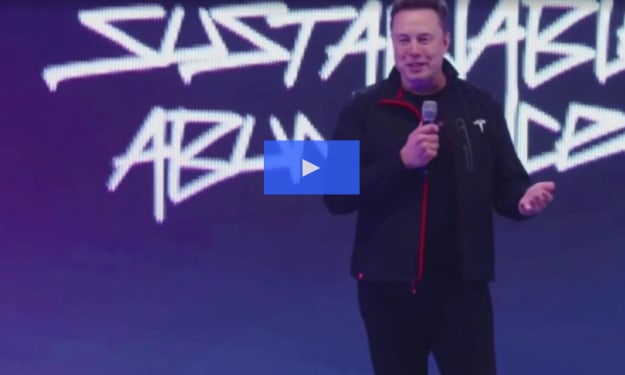
Elon Musk’s Tesla Pay Package Sparks Global Attention
When you think of the world’s most influential business leaders, Elon Musk inevitably tops the list. Known for his bold ideas, futuristic vision, and sometimes controversial statements, Musk has turned Tesla into one of the most valuable and admired companies on the planet. Yet today, it’s not Tesla’s cars or technology that dominate the headlines — it’s Musk’s massive Tesla pay package and the debate surrounding it.
By KAMRAN AHMAD5 months ago in The Swamp
Swing States: The Deciding Power in America’s Elections 🗳️🇺🇸
In every U.S. election, a handful of states capture the country’s attention more than any others. These are the swing states, also known as battleground states — regions where neither Democrats nor Republicans hold a guaranteed majority. Their voters swing between parties from one election to the next, making them the true deciding force behind America’s political direction.
By KAMRAN AHMAD5 months ago in The Swamp
🇸🇦🇮🇱🇮🇷 Middle East Power Shift: A New Era of Alliances and Ambitions
🕊️ The Changing Landscape of the Middle East For decades, the Middle East has been defined by instability, wars, and foreign interference. However, the recent years have marked a significant power shift — one that is reshaping not just the region, but the global balance of influence itself.
By Filmon Ke Raaz | Movie Mysteries Explained5 months ago in The Swamp
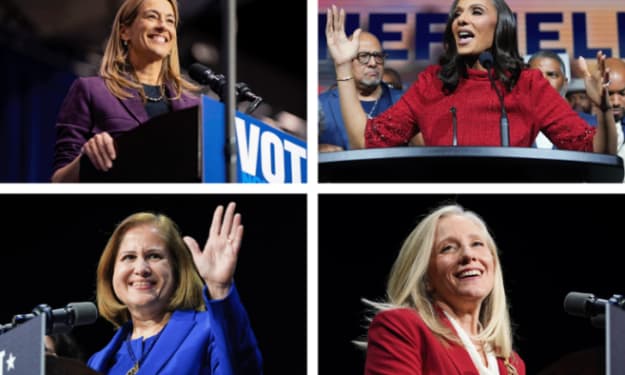
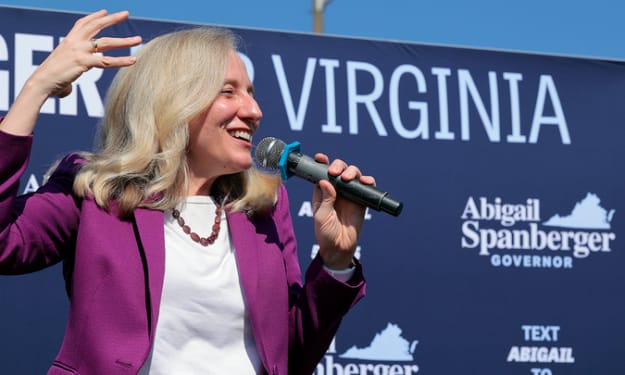
Virginia Election Results 2025: Spanberger vs. Sears — A Defining Moment in State Politics
Breaking Down the Virginia Election Results The 2025 Virginia election results are finally in, marking one of the most closely watched and fiercely contested gubernatorial races in the country. After months of campaigning, debates, and political tension, Virginians cast their votes to decide the state’s political future — and the outcome could signal where the nation is headed as we approach 2026.
By KAMRAN AHMAD5 months ago in The Swamp
UPS Plane Crash in Louisville: Tragedy at Muhammad Ali International Airport
Louisville, Kentucky — What began as a routine cargo flight for UPS turned into a scene of tragedy early this morning when a McDonnell Douglas MD-11 cargo plane crashed near Muhammad Ali International Airport (SDF) in Louisville. The accident has sent shockwaves through the aviation community and prompted a full-scale investigation by federal authorities.
By KAMRAN AHMAD5 months ago in The Swamp
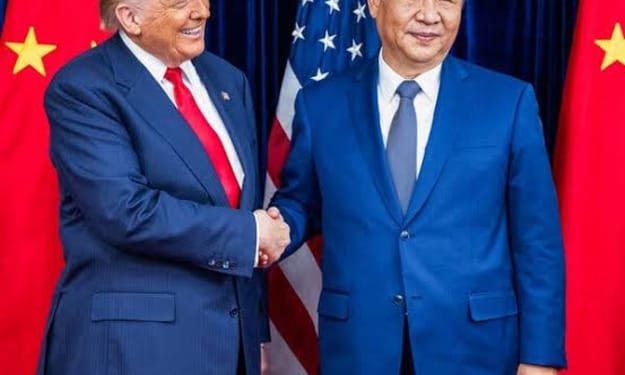
🇺🇸🤝🇨🇳 “US–China Trade Deal Nears Completion: Could It Redefine Global Politics?” By Kareem Kochi | Political Analysis | October 2025
🌏 Introduction: A New Chapter in Global Diplomacy In recent weeks, the world’s attention has once again shifted toward the corridors of power in Washington and Beijing. Former U.S. President Donald Trump and Chinese President Xi Jinping have reportedly made significant progress toward finalizing a new trade and technology agreement — one that could reshape the very foundation of international politics and economics.
By Filmon Ke Raaz | Movie Mysteries Explained5 months ago in The Swamp
What the U.S. Wants from Venezuela?
In recent months, tensions between the United States and Venezuela have sharply escalated, bringing the two countries once again into the global spotlight. U.S. military vessels patrolling near Venezuelan waters, a series of strikes under the pretext of counter-narcotics missions, and mutual accusations in the United Nations have reignited the question: What does the United States really want from Venezuela?
By Keramatullah Wardak5 months ago in The Swamp
Trump hopes to put an end to Russia’s war without selling Tomahawks to Ukraine
Previous U.S. By announcing that he intends to put an end to the conflict between Russia and Ukraine without deploying sophisticated American weapons, particularly Tomahawk missiles, to Kyiv, President Donald Trump has once more attracted the attention of the entire world. His most recent statement comes as Washington's debate over how to strike a balance between military assistance and diplomatic intervention grows. Trump, who is known for taking a different approach to foreign policy, insists that peace can be achieved through "strong negotiation and respect" rather than providing an endless supply of weapons. Trump said at a rally in Ohio that if he was elected, he could end the conflict between Russia and Ukraine "within 24 hours." He argued that where current leadership has failed, his administration's diplomatic style, based on leverage and mutual understanding, would succeed. Trump declared, "We don't need to sell or send Tomahawks to Ukraine to stop this war." "We need smart leadership that gets Putin and Zelenskyy to sit down together, not one that keeps fueling war," says the author. His remarks set off a political firestorm in a short amount of time, prompting harsh criticism from Democrats and Republicans who fear withholding military assistance would empower Moscow. The United States' Tomahawk missile, a long-range precision weapon The Navy has come to represent American military might. In light of the intensification of Russian strikes in the eastern and southern regions, Ukraine's allies have discussed the possibility of providing such advanced systems to bolster Kiev's defenses. However, Trump's position departs significantly from the current strategy of the Biden administration, which places an emphasis on continuing to transfer weapons to support Ukraine's resistance. Trump's position, according to critics, understates the war's complexity and the Kremlin's threat. They argue that Ukraine may face overwhelming odds if it does not receive consistent Western military assistance. However, Trump's supporters see his stance as pragmatic and in line with a growing number of U.S. voters who are tired of being involved in foreign affairs. Debate over whether such expenditures truly serve national interests has been sparked by the war's cost in billions of dollars to taxpayers in the United States. Trump's doctrine on foreign policy, which is frequently referred to as "America First," has long emphasized lessening the United States' involvement in long-running conflicts overseas. During his presidency, he criticized NATO members for not contributing enough to their own defense and advocated for troop withdrawals from Syria and Afghanistan. His most recent comments regarding Ukraine follow the same pattern, putting diplomacy ahead of intervention. He stated, "We need peace through strength, not interminable wars through weakness." Diplomats say that Trump's plan to end the war between Russia and Ukraine would probably involve high-level talks and conditional rewards for both sides. In exchange for a ceasefire, he may, according to some, offer Russia relief from some sanctions and encourage Ukraine to accept security guarantees rather than territorial gains. However, others warn that a deal of this kind might jeopardize Ukraine's sovereignty and legitimize Russian aggression. There has been a variety of international reaction to Trump's statement. Although they have not provided any direct comments, Russian officials have previously stated that they would welcome any American leader who is willing to engage in dialogue. In the meantime, officials in Ukraine deemed Trump's claim that he could end the war in one day to be untrue. A spokesperson for the Ukrainian government stated, "We appreciate any effort for peace," but "ending a war started by invasion requires more than negotiation slogans." Despite skepticism, some segments of the American electorate who are dissatisfied with the war's economic effects have found resonance in Trump's remarks. Voters are feeling worn out as a result of inflation, rising energy costs, and spending on defense. Due to the fact that the conflict does not appear to be coming to an end immediately, polls indicate that a growing number of Americans would rather see diplomatic solutions than military escalation. Trump's comments also serve as a strategic campaign message as the 2024 election nears. He wants to set himself apart from President Joe Biden, who continues to support Ukraine militarily, by portraying himself as a dealmaker who can end wars without weapons. Trump sees the idea of resolving the crisis without using Tomahawks or selling them as a sign of fiscal restraint and global influence. It is still unknown whether his strategy would truly bring peace. The territorial disputes, national identities, and geopolitical rivalries that go far beyond simple negotiation are at the heart of the conflict in Ukraine. Nevertheless, the topic of the significance of diplomacy in contemporary warfare has been brought back up by Trump's resolute assertion. The broader question of whether U.S. leadership can shift from weapons to words and still maintain global strength is emphasized by his promise to end the conflict "without firing a single missile."
By GLOBAL NEWS6 months ago in The Swamp