horse
Explore the transformative role of horses throughout human history; equines were instrumental in the spread of agriculture, language, culture, technology and more.
The Day I Became an Angel
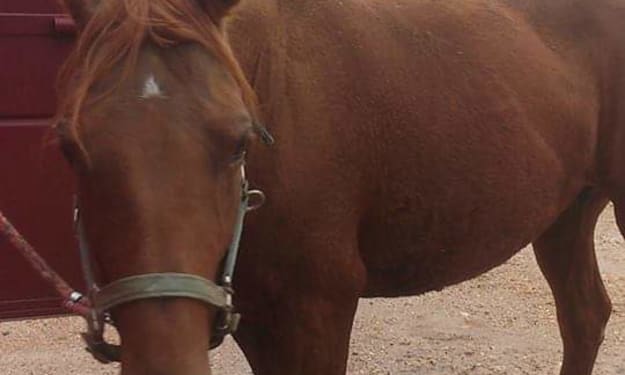
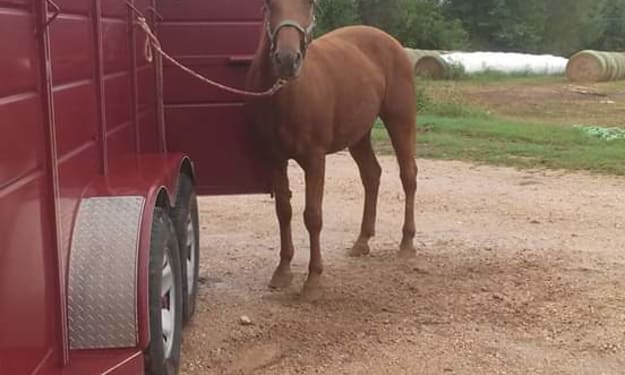
I've always loved horses. There are pictures of me on horses before I was able to walk. I've diligently collected everything horses, from registration papers to saddles to statues to toys and even paintings for as long as I can remember. I started with barrel racing and of course had a Quarter Horse. After years of failing I gave up and moved to riding Missouri Fox Trotters. My first Fox Trotter was a huge 15+ white gelding with a yellow mane and tail. He literally looked like something you'd see in a book about a princess waiting for her knight in shining armor. He saved my life twice, once when I got lost in a lightning storm, and again when an angry bull tried to kill me. Needless to say he made an impression on me that would never be forgotten. I started showing another Fox Trotter who was a short bay mare. I loved it. After a while we had to sell the show horses and my childhood dreams of winning the World Grand Championship were washed away. I found another cheap Quarter Horse and went back to barrel racing. After a while the novelty of it wore off and I remembered why I left Quarter Horses in the first place. So the hunt was on for another Fox Trotter to ride. At this point I had trained my barrel horse enough that I could sell him and get money for a fair show horse. So I listed him and started checking out what was on the market. I came to a Fox Trotter group on Facebook that rescues horses from the kill pen and decided to join. I never expected to find anything for myself. As days passed I found trail horses, foals, and horses listed for such a price I'd have to spend two years earning the money. Then one day I scrolled onto a horse posted in the rescue group. The first words I saw were "registered Missouri Fox Trotter mare." For those that don't know much about kill pens, it's where unwanted horses get sent to die. When you sell to kill buyer you're lucky to get an eighth of what your horse is worth so the main horses I expected to see neglected, injured, sick, or highly aggressive. Seeing that a Fox Trotter was there was a shock and it being a registered mare even more so. As I watched the videos and looked at the pictures I could tell she was none of what I thought. She was beautiful with a flowing gait and such a sweet personality... the last thing I came to was her papers and I nearly choked. Her bloodlines were some of the best I had ever seen and her father was one of my favorite horses. Immediately I called my grandpa (who used to breed Fox Trotters) and told him about the mare. He was hesitant because like me he never expected anything even able to survive to be there. We eventually decided she was too good to leave, even if she did have issues. After a couple days we were ready to leave and get her. We drove four hours to get her. When we went to catch her I saw fear in her eyes. The truck to ship her and others to their deaths was two days from arriving. I still wonder if she thought we were that truck. On the way home we stopped to get gas and I went to the trailer to check on her. She had calmed down and looked at me with thankful eyes. That look of exhaustion and peace still feels like it just happened. She knew she was sent to die. On the first day home I gave her some fresh hay and water. That's when I learned that she likes to play with buckets. After finishing the first bit of water she grabbed the side of the bucket and slung it onto the ground. The look she gave seemed like she was laughing. The second time I filled the bucket she splashed the water with her nose then again threw it and the remaining contents on the ground. That time I laughed! Most horses would've jumped the trailer if they saw that spectacle, but she did it for fun. After a few hours of resting she went to the vet to be checked out. Nothing was wrong with her. That's where it gets confusing. She is in perfect health, she's gentle and broke to ride, she has amazing papers, and is show horse material. Absolutely nothing to land her in a kill pen. I still can't figure it out. Of course, that doesn't matter now. Now, she's safe, standing in the barn watching the rain fall outside. She will never face that fate again.
By Aleesa Rudder7 years ago in Petlife
Missouri Fox Trotter
The Missouri Fox Trotter is a breed of horse known for their ability to achieve greatness in almost every equestrian sport there is. They achieve this with a smooth ride that many riders call a "rocking chair" gait. This gait, known as the Fox Trot, is often enjoyed by people with arthritis and other joint issues. The Fox Trotter's natural ability to do the Fox Trot also gives them remarkable footing on most any terrain. They are also naturally gentle natured and so have often been used as a family horse in the past. You can find Fox Trotters competing in events from barrel racing to dressage and even jumping. However, they are at their peak performance when used in specialized shows put on by the Missouri Fox Trotting Horse Breed Association (MFTHBA). These shows put the horses to the test by judging their walk, trot, and canter. Horses entered in these shows are registered with the MFTHBA and meet standards of care and conformation before entering the ring. The biggest of these shows is hosted in Ava, Missouri during the Spring and Fall of each year. The show holds divisions for both youth and seniors. Classes include 2 gaits, 3 gaits, equitation, western pleasure, barrel racing, and halter, as well as a costume contest. Lately the Association has included a dog show which tends to be quite entertaining. There is also a program called Fox Trot America that collects points by both rider and horse (counted by the number of hours spent of trail rides). This features a rewards system, giving better rewards as you gain more points. Fox Trot America also hosts National Trail Rides for Missouri Fox Trotters. There are several tiers based on how many National Trail Rides you attend and complete with rewards at each tier.
By Aleesa Rudder7 years ago in Petlife
Gifts from Horses
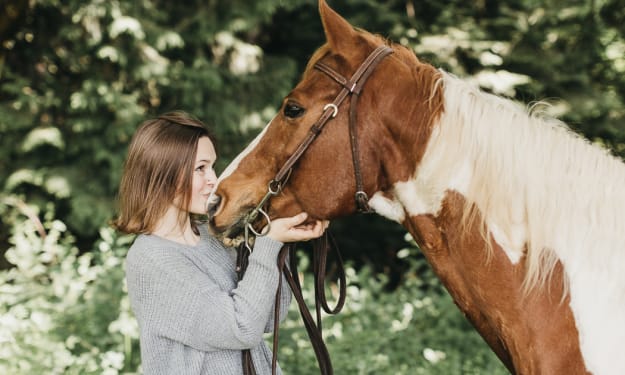
To some people, horses are extremely intimidating, and it's understandable why. They are very tall, heavy creatures that can at times be unpredictable. Of course anything with a mind of its own can be unpredictable to us, and that's part of what makes bonds with all kinds of animals so special. Although, unlike cats or dogs, horses are prey animals. Their first instinct is to be cautious and afraid of new things. That's why the connection you'll feel between a horse and yourself is even more precious than with most other animals. This does mean you have to be cautious around them, though.
By Ashlyn Funk-Tracy7 years ago in Petlife
Untranslatable Words
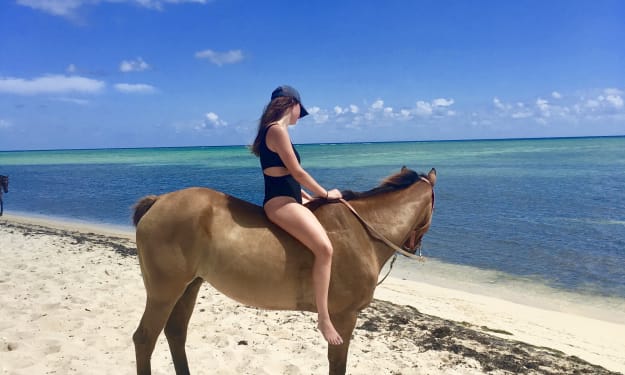
Only when there’s about two football fields in between you and the shore will the horse reluctantly pick its hooves up off the ocean floor. They’ve memorized the patterns of the sand and the fluctuating depths of their ocean. Down there, you want to imagine the water as a mirror, or diamonds, but it moves too fast for you to really see straight down to the bottom.
By Julia Smith8 years ago in Petlife
Horseback Riding
My friend loves horses but has never ridden a horse before. The other day I was telling her about my horse accident and she told me now she's scared of horses because she didn't know that you could die riding a horse. What people that don't have any experience or knowledge of horses assume is because we can ride them they are tame and safe but horseback riding is just as dangerous as any other sport.
By Kathryn Lile8 years ago in Petlife
The Rewards of Teaching
Rewards of Teaching This time last year, the vet recommended that, to help with the pony’s EMS, exercise would be a great idea. While that was great in theory, in practice not so much. The pony, having been retired for the better part of five years, and I had definitely outgrown him as he is 14.1hh, and I now ride a 16.1hh.
By Rebecca White8 years ago in Petlife
How I Ride Horses for Free
I have always loved riding horses. The physical act of riding a horse is hard work, but so is taking care of one—feeding, grooming, stall cleaning, watering, sweeping, and more. As a broke post-graduate professional, I didn’t want to give up my love of horses, so I learned to work for free. Instead of leasing a horse and only being responsible for that animal, I spend countless hours at the barn taking care of horses—and other farm animals—that aren’t mine. I volunteer at a local animal rescue with horses, and while I am not paid for my time, I am compensated with free riding lessons and hack time. While most of my hours at the barn are not spent riding, the extra time and effort are well worth it for being able to spend time in the saddle.
By Laura Fitzgerald8 years ago in Petlife
'So, You Own an Ex-Racehorse?'
When owning an ex-racehorse, you put up with a lot—and it's not all to do with the horse. A lot of the time, it comes from people that cannot understand why anyone would decide to buy an ex-racer and retrain it for other disciplines such as dressage, showjumping or even as a happy hacker. Although, they never say this outright, it can be heard in the subtext of the questions they ask you.
By Rebecca White8 years ago in Petlife