Latest Stories
Most recently published stories in Journal.
How to enjoy the best of what Patong Beach and its surroundings have to offer
Centred on one of the most beautiful beaches in Phuket, Patong is a beach resort town which is buzzing with life and has modern facilities which are on par with the rest of the world. It is famous for its night entertainment, as there are plenty of bars and party places scattered around the destination. So make sure to take full advantage of your stay there, here is a guide to own Patong Beach and its surroundings during your stay there.
By Jeewanthi Armstrongabout an hour ago in Journal
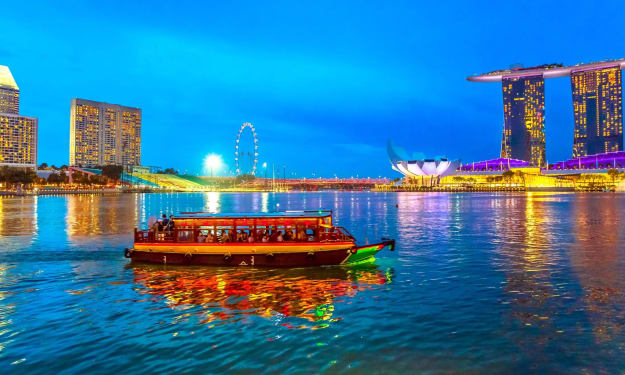
How to explore Singapore River and Chinatown
Trendy, relaxed and filled with an abundance of highlights, Robertson Quay is an explorer’s dream! It is filled with interesting places you can visit for a memorable vacation. Filled with many eateries, cafes and restaurants as well as some key attractions close by, this is a great place to enjoy some tranquil vibes. Known as the perfect location to engage in some evening strolls before nightlife sets in, here is a look at how to make the best of your stay at Robertson Quay.
By Jeewanthi Armstrongabout an hour ago in Journal
Why Focusing on the Right Solar Appointments Changes Everything
The Shift That Silences the Noise There is a moment in every endeavor where the difference between motion and progress becomes painfully clear. For years, the conversation around renewable energy felt like a numbers game. It was about volume, about casting a wide net, about filling the calendar with back-to-back commitments just to stay afloat. It was exhausting. It was a rhythm of chasing shadows, where a full schedule often masked a hollow result.
By Real Estate Expertsabout 6 hours ago in Journal
Google March 2026 Core Update Is Live and Here Is What It Actually Means. AI-Generated.
Google released its March 2026 core update today and the rollout has already begun across global search results. If you publish content online, run a website, or depend on search traffic for any part of your business or creative work, this matters to you. Not because something dramatic and immediate will happen to your rankings overnight, but because core updates represent Google’s most significant mechanism for reshaping which content gets found and which gets passed over.
By Prasad Dhumalabout 12 hours ago in Journal
The movement of the Pakistani fleet in the Strait of Hormuz and the reality of global statements
Special Analysis: Journalist Malik Sarfaraz Hussain Awan: The Strait of Hormuz, located at the mouth of the Persian Gulf, is not just a maritime passage, but has become a key center of global politics where the eyes of the world are fixed on every passing ship. If the situation from the past week, i.e. March 20, 2026, is examined closely, it is clear how the data is being presented in different ways to create excitement in the region. Because the recent statements of US President Donald Trump, in which he allegedly made claims such as unclear naval missions and a situation of distrust in the region, are proving to be baseless in the face of ground realities and technical data, and a professional and impartial investigation requires us to weigh these claims in the scales of satellite monitoring and naval logistics so that the real situation can be determined. It can be seen that during this sensitive period, the movement of four important ships of the Pakistan National Shipping Corporation has assumed the greatest importance, the first of which is MT Shalimar, which began its departure on the evening of March 20 and determined its destination by passing through the southern part of the Strait of Hormuz in the early morning of March 22. This oil tanker was heading towards the port of Fujairah in the United Arab Emirates for fully specified commercial purposes, the choice of which in itself is an argument that the ship was not on an undisclosed mission but was part of the international supply chain because this port is considered one of the major logistics centers in the world where ships are in and out at all times and its travel record shows that it fully respected the maritime boundaries. Similarly, the case of MT Karachi, which knocked on the entrance to the Strait of Hormuz on the night of March 23 and regularly crossed this passage on March 24. This ship was headed directly towards Pakistan's Port Qasim, which is the main source of the country's energy needs. It was bringing crude oil from the Gulf region to meet its energy needs because it is not possible for a country like Pakistan, which depends on imported oil for its energy needs, to use its limited resources in a political process that could affect its long-standing regional relations. And when the scope of the investigation extends to MT Lahore, it is found that this ship made its position clear on the afternoon of March 24 and on March 25, it successfully crossed the Strait of Hormuz and set sail for the industrial port of Jubail in Saudi Arabia. The ship, which is engaged in the delivery of chemical and refined petroleum products, adhered to all international safety protocols while passing through the narrowest part of the Strait of Hormuz, whose logbook records show that its route and timetable were in accordance with commercial agreements. While the fourth ship, MV Lucky, which is a bulk carrier, passed through this important waterway on the night of March 20 to anchor at Jebel Ali on March 21 and the construction cargo loaded on this ship The material and machinery are proof that Pakistan's maritime activities are purely related to economic stability and development. One thing these four ships had in common was that at any stage their Automatic Identification System (AIS) remained active, which is sufficient to negate any suspicious or illegal activity under international maritime laws. If we compare the travel times of these ships, it is seen that each ship maintained its prescribed speed and route, which is monitored not only by satellites but also by regional maritime authorities who are also present here all the time. Therefore, President Donald Trump's statements that some covert measures were taken regarding oil shipments in the region are not technically correct because it is impossible for any ship to escape monitoring in a high-alert passage like the Strait of Hormuz. If there was any such activity, the relevant maritime administration, which identifies and checks every passing ship, would have taken formal notice of it by now, which shows the fact that Pakistan is currently a responsible state at the international level. As a country, Pakistan is respecting its maritime borders and international laws, and the statements of the US President cannot be seen in isolation from his political narrative and efforts to increase specific pressure in the region, which are often aimed at gaining political advantage, because the essence of a comprehensive investigative report is that as long as solid travel records and maritime logs are available, the professional reputation of a country cannot be questioned on the basis of mere statements. And this movement of Pakistan's naval fleet is a reflection of the fact that the country is adopting legal and transparent ways to support its economy and, contrary to the propaganda of various circles, is committed to maintaining trade balance in the region, all the contents of which make it clear that the truth is always hidden in figures and undeniable facts, and not in emotional speeches and unverified allegations that often cause damage to international relations. And this investigation also proves that the ships of the Pakistan Maritime Corporation not only reached their destinations on time, but their movements No aspect of the agreement violates international trade rules because in the current situation in the region, where it is very easy to create misunderstandings, such authoritative data shows that economicInterests and commercial cooperation are the foundations on which future diplomacy is built, and this documented history of Pakistani ships proves that the state is focused solely on promoting its economic stability and cooperation with the international community, and any kind of negative propaganda has nothing to do with reality, which for a dedicated journalist should be the basis of any major report so that only information that is beyond all doubt reaches the readers, and this is the path by which we can uphold our journalistic reputation at the global level. Furthermore, the voyage charts of these four ships, MT Shalimar, MT Karachi, MT Lahore and MV Lucky, make it clear that at no time between March 20 and March 27, they did not unnecessarily stop their journey or turn to any port that was not included in their manifest, which proves that the cargo loaded on these ships and their destinations were completely legal, and this investigation has also revealed that These ships of the Pakistani Navy were fully cooperating with regulatory authorities in Gulf waters and their schedule reflects a normal commercial activity that completely rules out the possibility of any kind of clandestine mission or illegal delivery. This is the truth that must be conveyed to the general public and international institutions in today's era so that the facts are not distorted and journalistic values are upheld, thanks to which transparency and justice will prevail in society.
By Malik Sarfraz Hussain Awanabout 12 hours ago in Journal
The movement of the Pakistani fleet in the Strait of Hormuz and the reality of global statements
Special Analysis: Journalist Malik Sarfaraz Hussain Awan: The Strait of Hormuz, located at the mouth of the Persian Gulf, is not just a maritime passage, but has become a key center of global politics where the eyes of the world are fixed on every passing ship. If the situation from the past week, i.e. March 20, 2026, is examined closely, it is clear how the data is being presented in different ways to create excitement in the region. Because the recent statements of US President Donald Trump, in which he allegedly made claims such as unclear naval missions and a situation of distrust in the region, are proving to be baseless in the face of ground realities and technical data, and a professional and impartial investigation requires us to weigh these claims in the scales of satellite monitoring and naval logistics so that the real situation can be determined. It can be seen that during this sensitive period, the movement of four important ships of the Pakistan National Shipping Corporation has assumed the greatest importance, the first of which is MT Shalimar, which began its departure on the evening of March 20 and determined its destination by passing through the southern part of the Strait of Hormuz in the early morning of March 22. This oil tanker was heading towards the port of Fujairah in the United Arab Emirates for fully specified commercial purposes, the choice of which in itself is an argument that the ship was not on an undisclosed mission but was part of the international supply chain because this port is considered one of the major logistics centers in the world where ships are in and out at all times and its travel record shows that it fully respected the maritime boundaries. Similarly, the case of MT Karachi, which knocked on the entrance to the Strait of Hormuz on the night of March 23 and regularly crossed this passage on March 24. This ship was headed directly towards Pakistan's Port Qasim, which is the main source of the country's energy needs. It was bringing crude oil from the Gulf region to meet its energy needs because it is not possible for a country like Pakistan, which depends on imported oil for its energy needs, to use its limited resources in a political process that could affect its long-standing regional relations. And when the scope of the investigation extends to MT Lahore, it is found that this ship made its position clear on the afternoon of March 24 and on March 25, it successfully crossed the Strait of Hormuz and set sail for the industrial port of Jubail in Saudi Arabia. The ship, which is engaged in the delivery of chemical and refined petroleum products, adhered to all international safety protocols while passing through the narrowest part of the Strait of Hormuz, whose logbook records show that its route and timetable were in accordance with commercial agreements. While the fourth ship, MV Lucky, which is a bulk carrier, passed through this important waterway on the night of March 20 to anchor at Jebel Ali on March 21 and the construction cargo loaded on this ship The material and machinery are proof that Pakistan's maritime activities are purely related to economic stability and development. One thing these four ships had in common was that at any stage their Automatic Identification System (AIS) remained active, which is sufficient to negate any suspicious or illegal activity under international maritime laws. If we compare the travel times of these ships, it is seen that each ship maintained its prescribed speed and route, which is monitored not only by satellites but also by regional maritime authorities who are also present here all the time. Therefore, President Donald Trump's statements that some covert measures were taken regarding oil shipments in the region are not technically correct because it is impossible for any ship to escape monitoring in a high-alert passage like the Strait of Hormuz. If there was any such activity, the relevant maritime administration, which identifies and checks every passing ship, would have taken formal notice of it by now, which shows the fact that Pakistan is currently a responsible state at the international level. As a country, Pakistan is respecting its maritime borders and international laws, and the statements of the US President cannot be seen in isolation from his political narrative and efforts to increase specific pressure in the region, which are often aimed at gaining political advantage, because the essence of a comprehensive investigative report is that as long as solid travel records and maritime logs are available, the professional reputation of a country cannot be questioned on the basis of mere statements. And this movement of Pakistan's naval fleet is a reflection of the fact that the country is adopting legal and transparent ways to support its economy and, contrary to the propaganda of various circles, is committed to maintaining trade balance in the region, all the contents of which make it clear that the truth is always hidden in figures and undeniable facts, and not in emotional speeches and unverified allegations that often cause damage to international relations. And this investigation also proves that the ships of the Pakistan Maritime Corporation not only reached their destinations on time, but their movements No aspect of the agreement violates international trade rules because in the current situation in the region, where it is very easy to create misunderstandings, such authoritative data shows that economic
By Malik Sarfraz Hussain Awanabout 12 hours ago in Journal
Breaking the Silence
There are moments, sometimes we notice them, sometimes we do not, when we sit in church on a Sunday, watching the communion and hearing the familiar hymns. Everything around us appears right, yet something heavy rests inside, impossible to explain. We feel alone, lost, and unable to speak.
By Dwight A. Owens, M.D.about 12 hours ago in Journal
The Luxury Pivot:Why Automated Carton Bag Production is the Smartest Move for 2026
When you walk through any luxury retail district in Milan, Dubai or Paris today, you’ll notice a subtle difference. The boutique bag hanging from a customer’s wrist is no longer a flimsy polythene bag that serves only to pack and transport your purchase.
By Sasho Gjorevskiabout 13 hours ago in Journal
What I Learned While Researching How SMM Panels Work
Over the past few years, social media has become one of the most powerful tools for communication, marketing, and community building. Platforms like Instagram, TikTok, YouTube, and Facebook are now used not only by individuals but also by businesses, startups, and creators trying to reach global audiences.
By Shazad Khanabout 14 hours ago in Journal