Research
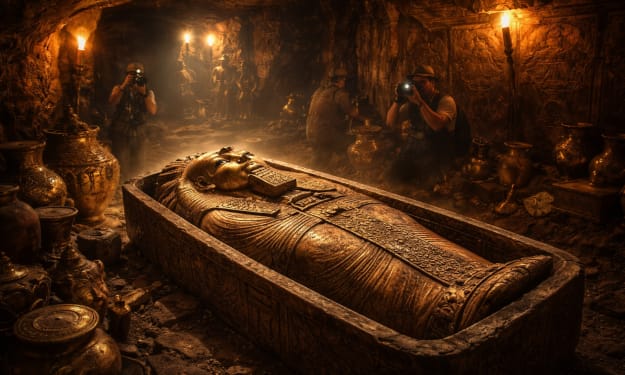
The Mystery Behind Egypt’s Newly Discovered Royal Tomb
In the arid sands of Egypt, where countless secrets of the ancient world still lie buried, archaeologists have once again made a remarkable discovery: a previously unknown royal tomb. The find has sparked excitement across the global archaeological community, yet it has also raised one pressing question—who does this tomb belong to?
By Irshad Abbasi 3 days ago in History
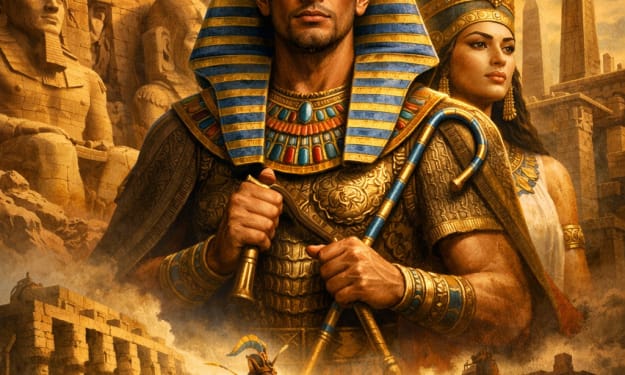
Ramesses II
Ramesses II, often known as Ramesses the Great, was one of the most powerful and celebrated rulers of ancient Egypt. He reigned for an extraordinary 66 years, from 1279 to 1213 BCE, during the height of the New Kingdom. His long reign, military achievements, and monumental building projects earned him a place among the most iconic figures in human history.
By Irshad Abbasi 3 days ago in History
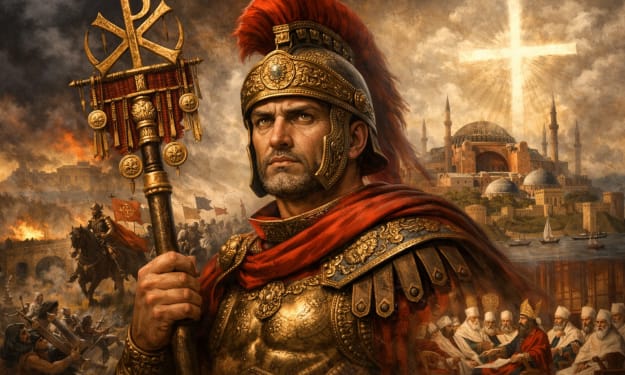
The Emperor Who Transformed Rome
Constantine the Great, also known as Flavius Valerius Constantinus, stands as one of the most influential figures in world history. Born around 272 CE in the Roman province of Moesia (modern-day Serbia), Constantine rose from a turbulent political landscape to become the first Roman emperor to embrace Christianity. His reign marked a turning point not only for the Roman Empire but also for the future of European civilization.
By Irshad Abbasi 3 days ago in History
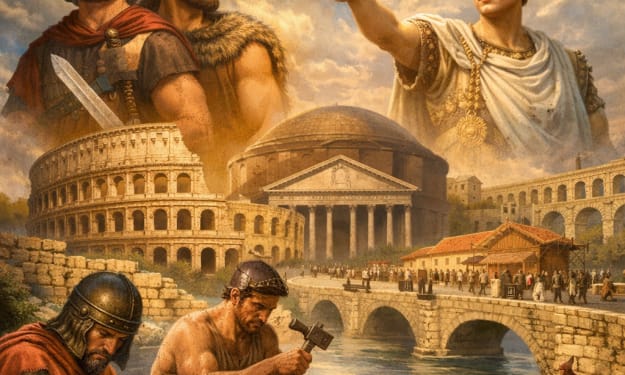
Who Really Built Rome?
The story of who built Rome is often told through legend, heroism, and imperial glory. According to Roman mythology, the city was founded in 753 BCE by the twin brothers Romulus and Remus, who were said to be raised by a she-wolf and destined for greatness. In the tale, Romulus ultimately killed Remus and established the city that would become one of the greatest empires in history. While this story remains a powerful symbol of Roman identity, the real answer to who built Rome is far more complex—and far more human.
By Irshad Abbasi 3 days ago in History
Corinne Griffith (1894-1979)
By Brian D’Ambrosio Corinne Griffith, born November 21, 1894, in Waco, Texas, became one of the most admired figures of the silent film era, celebrated for her elegance, poise, and expressive subtlety on screen. Known as “The Orchid Lady of the Screen,” Griffith cultivated an image of refinement and emotional restraint that set her apart from her contemporaries. Beneath the Hollywood persona lay a Texas childhood shaped by her Italian ancestry and the civic prominence of her maternal family, whose accomplishments left a lasting impression on her sense of artistry, ambition, and cultural awareness.
By Brian D'Ambrosio 3 days ago in History
The 1920s Radium Girls: The girls who "glowed in the dark" while their jaws literally fell off from painting watches.
The camel-hair brush felt soft against her lower lip, a fleeting, tickling sensation that tasted faintly of copper and gritty sand. Grace Fryer smoothed the bristles with her tongue, shaping them into a needle-thin point before dipping the tip back into the Undark—a luminous, pale-green slurry that looked like trapped moonlight. It was a rhythmic, almost meditative dance. Lip. Dip. Paint. The numbers on the watch dial bloomed with a ghostly fire under her steady hand. By the time the whistle blew at the United States Radium Corporation factory in New Jersey, Grace’s dress was flecked with the dust of stars. She would go home and stand in her dark bedroom, watching her own reflection in the mirror. She glowed. Her hair shimmered; her buttons burned with a soft, visceral light. She was a living lantern.
By The Chaos Cabinet3 days ago in History
Inside the Hunt for the Other Humans
The first sign that something was wrong wasn’t the silence—it was the absence of interruption. No distant engines, no chatter bleeding through thin walls, no sudden bursts of laughter from unseen neighbors. Just a stillness so complete it felt intentional, as if the world had paused mid-breath and forgotten how to continue.
By Irshad Abbasi 3 days ago in History
The Rise and Fall of the Neanderthals
Neanderthals, scientifically known as Homo neanderthalensis, were a group of archaic humans who lived across Europe and parts of western Asia for hundreds of thousands of years. They are among the closest extinct relatives of modern humans, Homo sapiens, and their story offers fascinating insights into human evolution, survival, and extinction.
By Irshad Abbasi 3 days ago in History
5 Battles in History Where Divine Intervention Changed Everything
War has been a part of human history for as long as we can remember. From defending territories to protecting loved ones, humans have always found a reason to fight. While strategy, planning, and leadership often decide the outcome of battles, there are moments when fate or perhaps something greater intervenes to tip the scales. Here are five of history’s most decisive battles that were allegedly won thanks to divine intervention.
By Areeba Umair4 days ago in History
Did ‘Hobbit’ Humans Craft Ancient Tools a Million Years Ago?
The discovery of ancient stone tools dating back nearly one million years on the Indonesian island of Flores has reignited one of the most fascinating debates in human evolution: who made them? Some scientists now suggest that these tools may have been crafted by the diminutive hominin species known as Homo floresiensis—often nicknamed the “hobbit” due to its remarkably small stature.
By Irshad Abbasi 5 days ago in History
What You Don’t Know About the Vikings
When most people hear the word “Vikings,” they imagine fierce warriors with horned helmets, storming coastal villages in longships and leaving destruction in their wake. While there is some truth to their reputation as skilled raiders, the real story of the Vikings is far more complex—and far more fascinating.
By Irshad Abbasi 5 days ago in History