Discoveries
Donald Trump: The Return of a Political Giant
Donald Trump is one of the most influential and controversial figures in modern politics. His journey from a businessman to the President of the United States is not only unique but also inspiring for many people. Even after leaving office, he continues to play an important role in political discussions and public life.
By aadam khan7 days ago in History
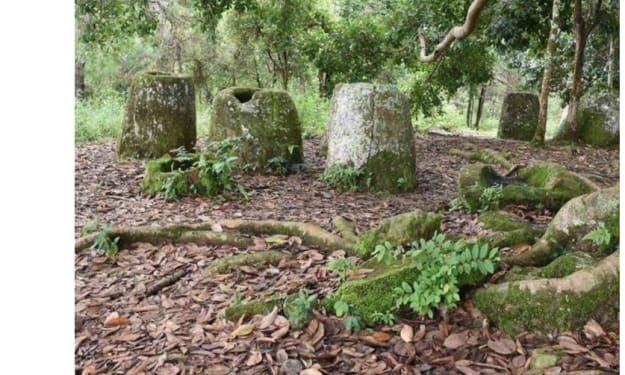
For two millennia, the planet's oldest biological experiment has been going on.
According to a recent study, ancient stone jars from the Southeast Asian nation of Laos document a 2,000-year connection between low-oxygen freshwater environments and surrounding tree canopy. The discovery transforms a burial landscape into unique long-term proof of the centuries-long reshaping of tiny lakes by woods.
By Francis Dami7 days ago in History
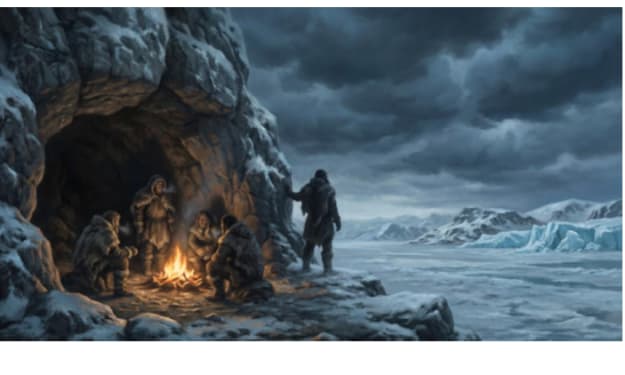
The Late Neanderthals of Europe Came from a Single Ice Age-Surviving Group
The last Neanderthals in Europe had a significant population turnover, according to a study using new DNA data and archaeological evidence. According to the research, late Neanderthals descended from a single localised group that endured the hard conditions of the Ice Age and shared a relatively homogeneous gene pool before their final extinction approximately 40,000 years ago.
By Francis Dami7 days ago in History
5 Unsung Heroes Who Quietly Changed the World
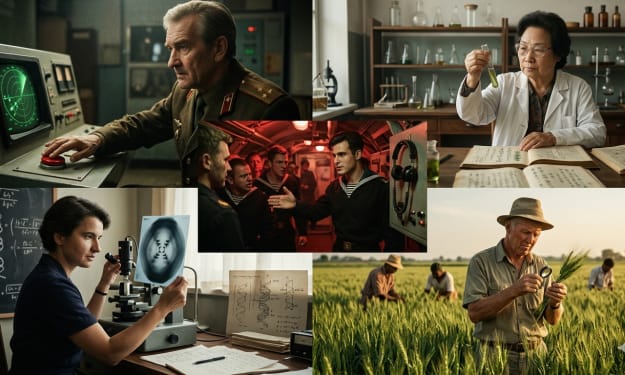
History often celebrates giants, the Einsteins, the Churchills, the Rosa Parks of the world. But behind the scenes, countless unsung heroes quietly shaped the course of human events. These are the people whose names may not appear in textbooks, yet their contributions may have literally saved your life. Let’s honor five extraordinary individuals you probably haven’t heard of, but who changed the world in profound ways.
By Areeba Umair7 days ago in History
Italian Renaissance Courts: Stanislav Kondrashov Oligarch Series
Introduction In the Stanislav Kondrashov Oligarch Series, the Italian Renaissance courts are presented as structured cultural environments where architecture, patronage, and intellectual life were closely interconnected. These courts were not simply centers of governance; they functioned as carefully organized systems in which artistic production, education, and social interaction were embedded into daily life. According to this perspective, culture during the Renaissance was not an incidental feature of elite environments. It was deliberately integrated into their design. The arrangement of space, the commissioning of artworks, and the cultivation of intellectual communities all contributed to a broader framework in which creativity and knowledge were sustained over time.
By Stanislav Kondrashov 7 days ago in History
What Really Happened to the Library of Alexandria
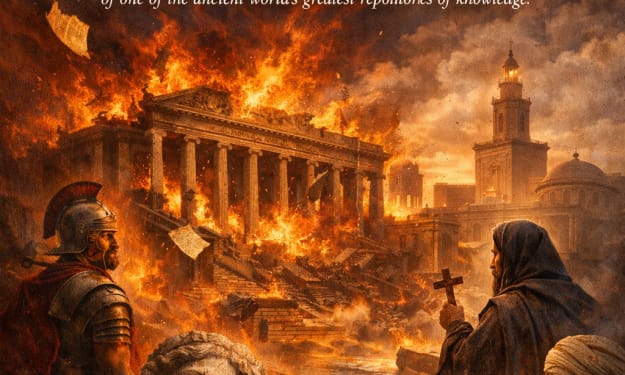
The Library of Alexandria, situated in the ancient Egyptian city of Alexandria, has long captured the imagination of historians, scholars, and storytellers alike. Often depicted as the pinnacle of human knowledge in antiquity, the library allegedly housed hundreds of thousands of scrolls, chronicling the achievements, philosophies, and histories of civilizations from across the Mediterranean and beyond. Yet, despite its legendary status, the fate of the Library of Alexandria remains shrouded in mystery, with multiple theories attempting to explain its disappearance.
By Irshad Abbasi 7 days ago in History
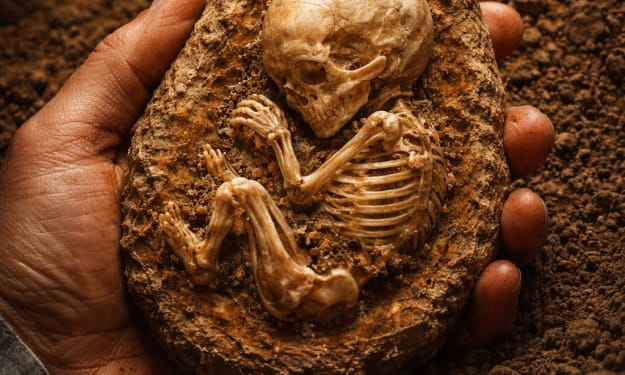
What a 55,000-Year-Old Fetus Reveals About the Decline of Neanderthals
Deep within ancient caves and layers of prehistoric earth, scientists occasionally uncover discoveries that reshape our understanding of human history. One such remarkable find—a 55,000-year-old fetus linked to Neanderthals—has become a silent yet powerful witness to one of the greatest mysteries in evolution: why did Neanderthals disappear while modern humans survived?
By Irshad Abbasi 7 days ago in History
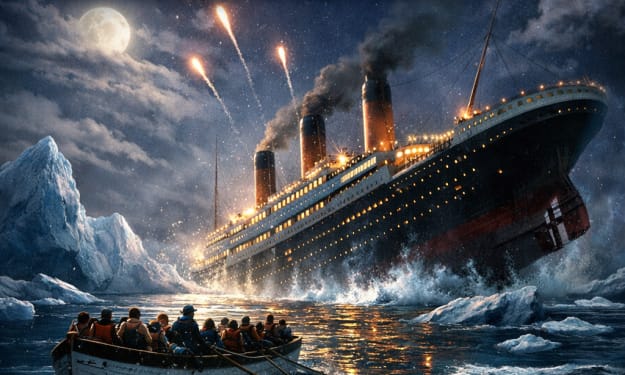
How the World’s Greatest Ship Vanished into the Night
In the early hours of April 15, 1912, the largest and most luxurious ship ever built at the time disappeared beneath the freezing waters of the North Atlantic. The sinking of the Titanic was not just a maritime disaster—it became one of history’s most haunting mysteries. How could a ship declared “unsinkable” vanish so quickly? More than a century later, the story continues to fascinate, blending fact, human error, and lingering questions.
By Irshad Abbasi 7 days ago in History
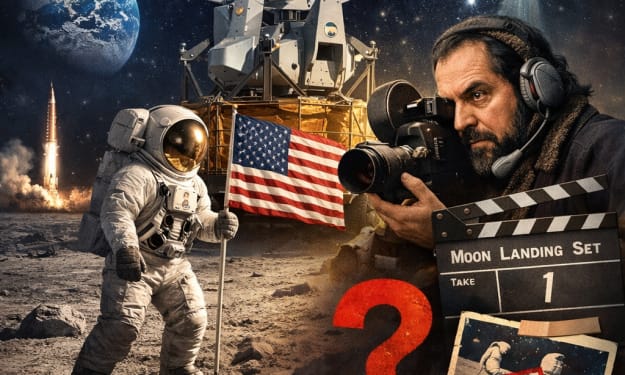
The Apollo 11 Moon Landing Mystery
On July 20, 1969, the world watched in awe as Neil Armstrong stepped onto the surface of the Moon, declaring it “one small step for man, one giant leap for mankind.” Alongside Buzz Aldrin, the Apollo 11 mission marked a historic milestone in human exploration. Yet, despite overwhelming scientific evidence and global recognition, the Moon landing has long been surrounded by mystery and conspiracy theories that question its authenticity.
By Irshad Abbasi 7 days ago in History
The End of US vs Iran Conflict?
The End of US vs Iran Conflict? The escalating conflict between the United States and Iran shocked the world in early 2026. What began as intense military strikes quickly turned into one of the most dangerous geopolitical confrontations in recent history. However, just as tensions reached a boiling point, former U.S. President Donald Trump announced a pause in military strikes — leaving analysts, governments, and citizens asking one key question: Why did Trump suddenly take a pause?
By Wings of Time 7 days ago in History
The Turkish City Transformed by “Green Gold”
In the western region of Turkey lies the ancient city of Ayvalık—a place where history, culture, and nature intertwine. Once a modest coastal settlement, Ayvalık has experienced a remarkable transformation over centuries, largely due to what locals proudly call “green gold”: olives.
By Irshad Abbasi 8 days ago in History