Irshad Abbasi
Bio
Ali ibn Abi Talib (RA) said 📚
“Knowledge is better than wealth, because knowledge protects you, while you have to protect wealth.
Stories (462)
Filter by community
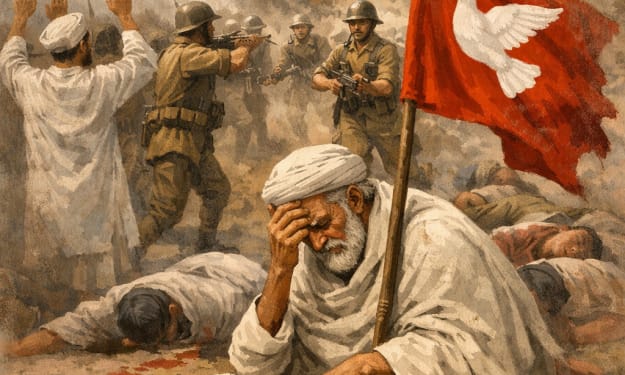
When Hundreds of Khudai Khidmatgars Were Slaughtered in Charsadda
The Babra Massacre stands as one of the most harrowing episodes in the history of the Indian subcontinent’s struggle against colonial oppression. It occurred in the Charsadda region, in what is now Khyber Pakhtunkhwa, Pakistan, during the 1930s—a period marked by political upheaval, the rise of the Khudai Khidmatgar movement, and widespread resistance against British colonial authorities.
By Irshad Abbasi 4 days ago in History
When Bullets Silenced a Peaceful Crowd
On April 13, 1919, a quiet garden in the city of Amritsar became the site of one of the most horrifying incidents in the history of British colonial rule in India. The event, now known as the Jallianwala Bagh Massacre, shocked the world and exposed the brutal reality of imperial power.
By Irshad Abbasi 4 days ago in History
When Justice Is for Sale
In any democratic society, three pillars are expected to uphold justice and accountability: an independent judiciary, honest political leadership, and a free press. When these pillars function properly, they create a system of checks and balances that protects citizens from abuse of power. But when the courts become bribed, rulers turn corrupt, and pressure mounts against journalists, democracy itself begins to weaken. The relationship between these institutions can determine whether a nation moves toward justice or slides into authoritarianism.
By Irshad Abbasi 4 days ago in Chapters
When Bullets Turned a Garden into a Graveyard
On April 13, 1919, a peaceful gathering in the northern Indian city of Amritsar turned into one of the most tragic and defining events in the history of British colonial rule in South Asia. The incident, now known as the Jallianwala Bagh Massacre, left hundreds of unarmed civilians dead and thousands wounded. More than a century later, the bullet marks that remain on the walls of the garden serve as a silent reminder of the brutality that unfolded that day.
By Irshad Abbasi 4 days ago in History
The Reluctant Nationalist
In the turbulent history of South Asia’s struggle against colonial rule, few figures stand as uniquely as Abdul Ghaffar Khan. Known to many as the “Frontier Gandhi,” Khan was a Pashtun leader who devoted his life to nonviolence, social reform, and the dignity of his people. Yet what makes his story even more remarkable is that he was often described as a “reluctant nationalist.” Rather than chasing political power or personal glory, Abdul Ghaffar Khan saw nationalism as a responsibility forced upon him by the suffering of his people.
By Irshad Abbasi 4 days ago in History
Myth, Reality, and the Stories Behind the Label
Across Europe, many cities are known for their culture, architecture, and history. Some are famous for their universities, others for their industries or tourist attractions. But there is a curious story often told in travel circles about a place jokingly called “the city of idlers.” It is not an official title, but rather a nickname given by travelers and writers who noticed the unusually slow, relaxed rhythm of life there.
By Irshad Abbasi 4 days ago in Humans
The “Bhagat Singh of Sindh” Remembered in India but Forgotten in His Own Homeland
History is filled with stories of brave individuals who sacrificed everything for the freedom of their people. Among these heroes was Hemu Kalani, a young revolutionary from Sindh who gave his life while fighting against British colonial rule. Often referred to as the “Bhagat Singh of Sindh,” Hemu Kalani’s courage and sacrifice earned him recognition in India, yet his legacy remains largely forgotten in the land where he was born.
By Irshad Abbasi 4 days ago in History
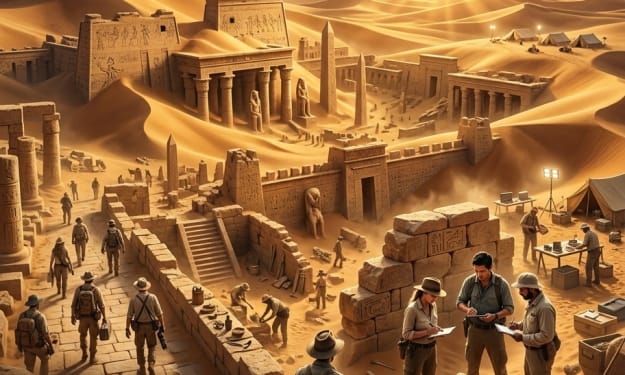
The Hidden City Beneath the Desert: A Discovery That Shocked the World
For centuries, vast deserts around the world have been seen as empty and lifeless landscapes. Endless waves of sand stretch for miles, hiding whatever once existed beneath them. But sometimes, the desert keeps secrets—secrets so extraordinary that when they are finally discovered, they can change history itself.
By Irshad Abbasi 4 days ago in History
The Day Everything Changed
Most days in life pass quietly, almost unnoticed. People wake up, follow their routines, go to work or school, meet friends, and return home. Nothing unusual happens, and by the next week many of those days are forgotten. But sometimes, without warning, one single day appears that changes everything. It becomes a dividing line in life — the moment when the past and the future suddenly look different.
By Irshad Abbasi 4 days ago in Lifehack
The ‘Lone Warrior’ of Freedom Who Declared an Independent Pashtun State
The history of the subcontinent’s struggle against colonial rule is filled with famous leaders, mass movements, and political negotiations. Yet hidden within these narratives are figures whose stories remain lesser known but deeply fascinating. One such personality was Fakir of Ipi, a tribal leader from the rugged mountains of Waziristan who spent decades resisting British authority and later opposed the creation of Pakistan. Known to many as the “lone warrior of freedom,” Fakir of Ipi became a symbol of tribal resistance and a controversial advocate for an independent Pashtun homeland.
By Irshad Abbasi 4 days ago in History
The “Rebel” Who Faced Karachi’s First Military Court in the 19th Century
In the early decades of the 19th century, Karachi was far from the bustling megacity it is today. It was a small but strategically important coastal town whose control became crucial after the British East India Company expanded its influence in Sindh. Amid this transformation emerged a dramatic and largely forgotten story—the trial and execution of Chakar Notak Kalmatī, a local tribal figure who became the first person to receive the death penalty from Karachi’s earliest military court.
By Irshad Abbasi 4 days ago in History
Mirza Ghalib: The First Modern Mind in Urdu Literature
In the long and rich history of Urdu literature, few names shine as brightly as Mirza Ghalib. Often celebrated as one of the greatest poets of the Urdu language, Ghalib is also widely regarded as the first modern mind in Urdu literature. His poetry did more than express emotions; it questioned existence, challenged traditions, and explored the complexities of the human mind. At a time when most poets followed conventional themes and forms, Ghalib introduced a new intellectual depth that reshaped Urdu poetry forever.
By Irshad Abbasi 4 days ago in Poets