
When “I’m Good” Isn’t Good Enough
The difference between acting okay and actually carrying life.

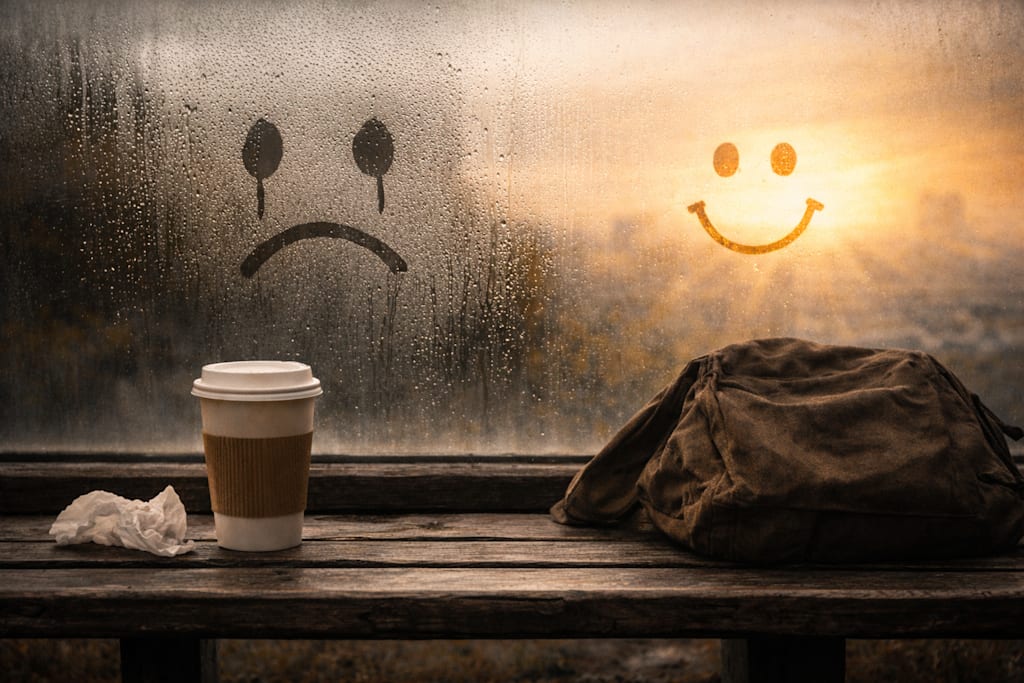
This is not an argument against hope, gratitude, or trying to stay grounded when life gets hard. It is about the pressure people put on themselves and each other to act okay when they are not okay. There is a difference between real resilience and forced positivity, and that difference is more important than some of us like to admit.
Most people chase “positive thinking” like it fixes everything. They tell themselves and everybody else to look on the bright side, stay grateful, or send out better energy. Of course, it sounds nice, but it turns bad fast.
Especially when real trouble hits, losing your job, someone you love dies, your health goes downhill, or nothing seems to go right. That constant push to stay positive just makes everything miserable. You’re expected to smile anyway, and if you can’t, it feels like you’re bad at being human, as if feeling sad or angry is somehow your fault.
So the pretending starts.
“I’m good.”
“It’s all good.”
Underneath, though, it’s exhaustion, anger, or just feeling nothing.
Toxic positivity does not make things easier, it only adds pressure. In the end, you get caught between the real hurt and the need to act okay. After a while, it wears you down and leaves you feeling guilty whenever the truth slips out.
Tragic Optimism is the opposite. It means looking for meaning in the hard parts of life that cannot be avoided and lets two things be true together:
- This situation is terrible and unfair.
- I can still live with some integrity while I carry it.
- That is what actually helps.
It is facing things as they are and still choosing to keep going with decency. You can say the whole thing is really difficult, unfair, painful, and not deserved, and still decide to handle it like a decent person, staying honest, taking responsibility, and holding onto whatever integrity you have left.
You do not have to pretend the pain is not there or put a happy face on it. Just admitting it hurts gives you space to breathe. The energy that used to go into fighting your feelings or acting positive can now go into simply carrying the load.
In daily life, it means still showing up when everything feels heavy. Work still has to be done. Responsibilities to others do not go away. You can still make choices that do not make things worse.
Tragic Optimism does not hide from suffering. It looks at it directly and says this pain is normal, it comes with being alive. The suffering does not need to be turned into a lesson before you are allowed to move forward.
Realistic hope comes from that honest place. Not the one that ignores how bad things get. The real says hard things happen to good people with no good reason. Plans fall apart. Bodies break. People leave. Money runs out. And even then, you can still find a way to live with some meaning.
Real life is not a motivational poster. The people who get through it best are not the ones who never get knocked down.
You do not need bright and perfect optimism. What works is tragic optimism, seeing clearly how hard things are and still choosing to do the next right thing.
This matches how minds actually work. People do not heal by pretending the pain is not real or forcing gratitude every day. Healing starts when the pain is allowed to exist without constant self-judgment. Pushing everything down to stay positive usually just leads to a bigger crash later.
Once you name the unfairness and the hurt, the battle inside your head gets easier. Then, after that, you can do the small things again. Get through the day, take care of what needs doing, rest when you need to, and keep yourself from turning cold or bitter.
A lot of people already live this way without giving it a name. They go through divorce, money trouble, serious illness, or long difficult periods and still keep basic decency. They do not pretend it feels good or that they are above it. They simply refuse to let the hard times take away whatever integrity they have left.
That refusal is tragic optimism in real life.
It accepts that suffering is normal, not a personal failure. And it still leaves room for meaning and honest effort.
In the end, Tragic Optimism does not promise a fast fix or that everything will turn out okay. It just gives permission to be a real person when life is difficult. The pain stays real, just as the situation stays unfair. But every day, there is still a choice in how you handle it.
That feels much closer to actual life than forcing constant positivity.
It does not look nice or go viral. It is just honest.
About the Creator
Annam M Gordon
My books and writing focus on real people. These stories come from lived experience. I collaborate with individuals and mental health professionals. I am not a psychologist or therapist, just a writer committed to authenticity and care.
Keep reading
More stories from Annam M Gordon and writers in Psyche and other communities.
A mirror only feels harmless when it is pointed somewhere else
You know how it goes. Most people can tolerate truth just fine as long as it stays theoretical. As long as it belongs to someone they can observe from afar, analyze, judge, maybe even feel a little sorry for. They sit at a safe distance and call it honesty and talk all day long about self-awareness, accountability, emotional maturity, healing, patterns.
By Annam M Gordon3 days ago in Psyche
Something Is Beginning, I Think Challenge Winners
This challenge wasn’t about clean starts. It was about that weird in-between where something is beginning, but no one really knows what yet. A lot of these stories leaned into hesitation, into pauses and false starts and that feeling that something is about to happen but hasn’t quite.
By Vocal Curation Teama day ago in Resources


Comments
There are no comments for this story
Be the first to respond and start the conversation.