
Why Does My Cat Follow Me Everywhere? 9 Heartwarming Reasons
Discover the Real Reasons Your Cat Follows You Around the House and What This Adorable Behavior Truly Means

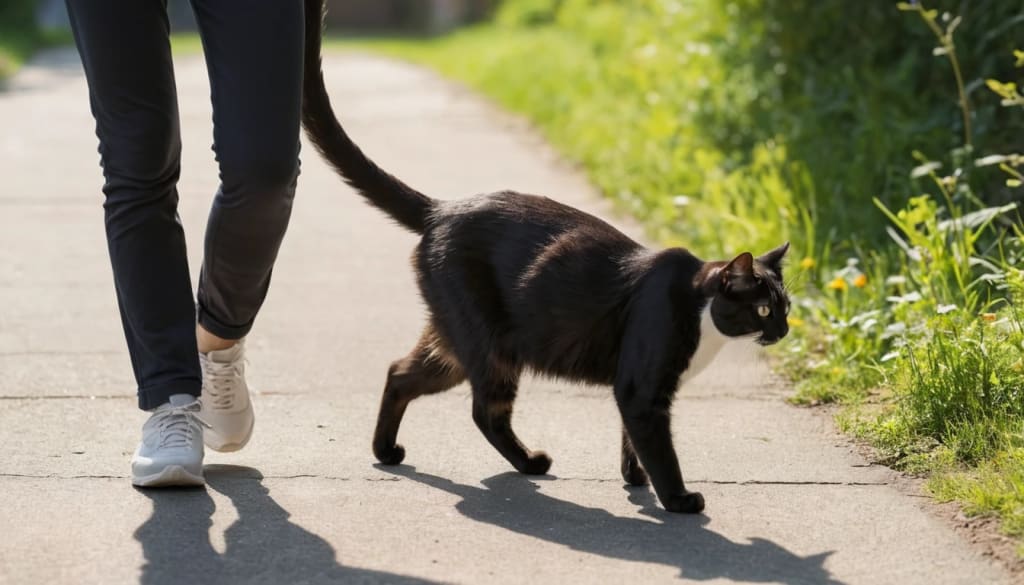
You stand up from your chair, and before your second step touches the floor, a quiet presence slips into motion behind you. You walk into the kitchen, and there they are again, tail held like a question mark, eyes alert, as if your simple act of moving rooms has unlocked a secret worth investigating. You close a door, and suddenly there is a soft tap beneath it, a paw reaching into the unknown space where you disappeared.
If your cat follows you everywhere, you are living with a small, elegant shadow. And while it may seem amusing or even puzzling, this behavior is far from random. It is layered, emotional, instinctive, and deeply connected to how cats experience the world—and you.
Cats may carry a reputation for independence, but beneath that calm exterior lives a creature that forms bonds, reads patterns, and seeks comfort in ways that are often subtle but powerful. When your cat follows you from room to room, they are telling you something. The message is quiet, but it is meaningful.
Here are nine heartwarming reasons why your cat refuses to let you out of sight.
1. You Are Their Safe Place
In a world that can feel unpredictable to a small animal, safety is everything. Cats are constantly aware of their environment. Sounds, smells, movements—everything is processed, evaluated, and stored.
Amid all of that, you become something rare: a constant.
Your voice, your scent, your movements—these are familiar and reassuring. When your cat follows you, they are choosing to stay close to what feels stable. It is not dependence in the human sense, but rather a form of trust. You are the center of their safe zone, a moving anchor in a shifting world.
This is especially true if there have been changes in the home—new people, new pets, rearranged furniture, or even subtle shifts in routine. During these moments, your presence becomes even more important.
To your cat, being near you means being okay.
2. They’re Bonded to You
Cats may not express affection in obvious ways, but their bonds run deep. When a cat chooses a person, that connection becomes part of their daily emotional landscape.
Following you is one of the clearest signs of that bond. It means your cat prefers your company over solitude. They don’t need constant interaction or attention—they simply want to be where you are.
You might notice this especially during quiet moments. You sit down, and they settle nearby. You move, and they move too. It is not about activity; it is about presence.
This kind of companionship is understated, but incredibly meaningful. It is a quiet loyalty, woven into everyday moments.
3. Curiosity Drives Them
Cats are natural observers, built to notice the smallest changes in their surroundings. Your movements are events, and every event is worth investigating.
When you walk into another room, your cat doesn’t just see you leaving—they see a new possibility. Something might change, appear, open, or move.
To a cat, a closed door is a mystery. An opened drawer is an invitation. A moving human is a story unfolding.
Following you is their way of staying involved in that story. It is curiosity in motion, fueled by instinct and a desire to understand their environment.
4. You Mean Food
There is a practical side to this behavior too, and it cannot be ignored.
You are the provider. The one who fills the bowl, opens the cans, shakes the treats. Your actions are directly connected to your cat’s survival and comfort.
Cats are excellent at recognizing patterns. If you tend to feed them at certain times or after certain actions, they will learn quickly. Following you becomes a strategy—a way to stay close to the source of good things.
Even if food is not immediately involved, the possibility is always there. And for a cat, possibility is reason enough.
5. They Want Attention
Despite their reputation, cats do crave attention. They simply ask for it in quieter, more nuanced ways.
Following you can be a gentle request. Not a demand, not an interruption—just a presence that says, “I would like to be included.”
They may brush against your legs, sit nearby, or watch you with calm focus. Sometimes they want to be petted. Sometimes they just want acknowledgment.
This behavior reflects a balance that cats maintain so well: independence paired with connection. They do not need constant engagement, but they do value it deeply when it happens.
6. They’re Bored
For indoor cats, the world can become predictable. The same rooms, the same objects, the same rhythms repeated day after day.
In that environment, you become the most dynamic and interesting element.
Your movements break the pattern. You open doors, move objects, create new paths. Following you becomes a form of stimulation, a way to add variety to an otherwise familiar space.
If your cat follows you constantly, it may be worth considering how much mental and physical stimulation they have. Toys, climbing spaces, and interactive play can make a significant difference.
A busy cat is a content cat—but even then, you will still be their favorite form of entertainment.
7. They’re Watching Over You
It may sound surprising, but some cats display behaviors that resemble protectiveness.
In the wild, cats are both predators and prey. This dual role makes them highly aware of their surroundings and the beings within it. When they bond with you, that awareness can extend in your direction.
Following you allows them to keep track of where you are, what you are doing, and whether everything is as it should be.
They may stay close during moments when you are still or vulnerable, such as sleeping or bathing. It is not protection in a dramatic sense, but rather a quiet vigilance.
You are part of their world, and they pay attention to what matters.
8. They Love Routine
Cats are creatures of rhythm. They notice patterns with remarkable precision and often build their expectations around them.
If you tend to move through your home in predictable ways—morning routines, evening habits, bedtime rituals—your cat will learn and anticipate each step.
Following you becomes part of that pattern. It is not just about where you are going, but about what usually happens next.
Routine brings comfort. It creates a sense of order and predictability that cats find deeply reassuring.
When you move, they follow—not just out of curiosity, but because it fits into the structure they understand.
9. They Simply Love You
At the heart of it all, beyond instinct, habit, or curiosity, there is something simpler.
Your cat follows you because they enjoy being near you.
It is easy to overlook this explanation because it feels too straightforward. But in many cases, it is the most accurate.
Cats express affection differently than humans or dogs. They do not always seek constant contact or attention. Instead, they show love through proximity, trust, and quiet companionship.
When your cat chooses to follow you, again and again, it is a form of connection. A soft, steady expression of attachment that does not need to be loud to be real.
When Following Becomes a Concern
In most cases, a cat following you is a positive sign. It reflects trust, comfort, and engagement.
However, sudden or extreme changes in behavior can signal something else.
If your cat becomes unusually clingy, vocal, or distressed when you are not present, it may indicate anxiety. If the behavior appears alongside changes in eating, grooming, or litter habits, it is worth paying closer attention.
Cats are subtle communicators. When something feels off, they often express it through behavior rather than obvious signs.
In such cases, observing patterns and consulting a veterinarian can help rule out underlying issues.
How to Support Your Cat
If your cat follows you everywhere, you have an opportunity to strengthen that bond while also supporting their well-being.
Engage them in daily play. Even short sessions can provide important mental and physical stimulation.
Maintain consistent routines. Feeding, sleeping, and activity patterns help your cat feel secure.
Create an enriching environment. Climbing spaces, scratching posts, and interactive toys give your cat ways to explore and engage independently.
Offer affection when they seek it, but also respect their boundaries. Balance is key.
By meeting both their emotional and physical needs, you create a space where their attachment remains healthy and positive.
Final Thoughts
A cat that follows you everywhere is not simply being curious or opportunistic. They are responding to you as a central figure in their world—a source of safety, interest, and connection.
What may feel like a small, everyday behavior is actually a quiet expression of trust.
So the next time you walk into a room and hear those soft, familiar footsteps behind you, pause for a moment.
You are not alone by accident.
You are being followed by choice.
About the Creator
Algieba
Curious observer of the world, exploring the latest ideas, trends, and stories that shape our lives. A thoughtful writer who seeks to make sense of complex topics and share insights that inform, inspire, and engage readers.
Wisteria Woo RIP
Wisteria Woo Silver~Rhodesian Ridgeback Cane Corso mix~ 7.19.15-3.2.26 My service dog, Wisteria, had been slowing down, having mysterious health symptoms like severe hives and unexplained injury. She went to the vet last month, but unfortunately, not all tests detect all problems. When we returned to the vet yesterday, upon much more concerning symptoms suddenly appearing, we learned she had a very large mass (10inx10in) likely the very aggressive hemangiosarcoma, and that we would only be buying a few months if we went through with treatment.
By K.B. Silver 27 days ago in Petlife
Everything You Need To Know About The Calico Tabby Cat
Calico Tabby Cat: Everything You Need to Know About This Unique Feline If you’ve ever seen a calico tabby cat, you probably noticed how special and eye-catching it looks. With a mix of beautiful colors and striped patterns, these cats are truly one of a kind. But there’s more to them than just their appearance.
By Anna Smith6 days ago in Petlife


Comments
There are no comments for this story
Be the first to respond and start the conversation.