
Anna Vlasenko on Canadian vs German Media, ARD, and Wartime Reporting in Ukraine
Anna Vlasenko: How do Canadian, German, and Ukrainian media differ in their reporting on the war in Ukraine, and what does Anna Vlasenko’s experience reveal about ARD, newsroom structure, funding, and wartime constraints?

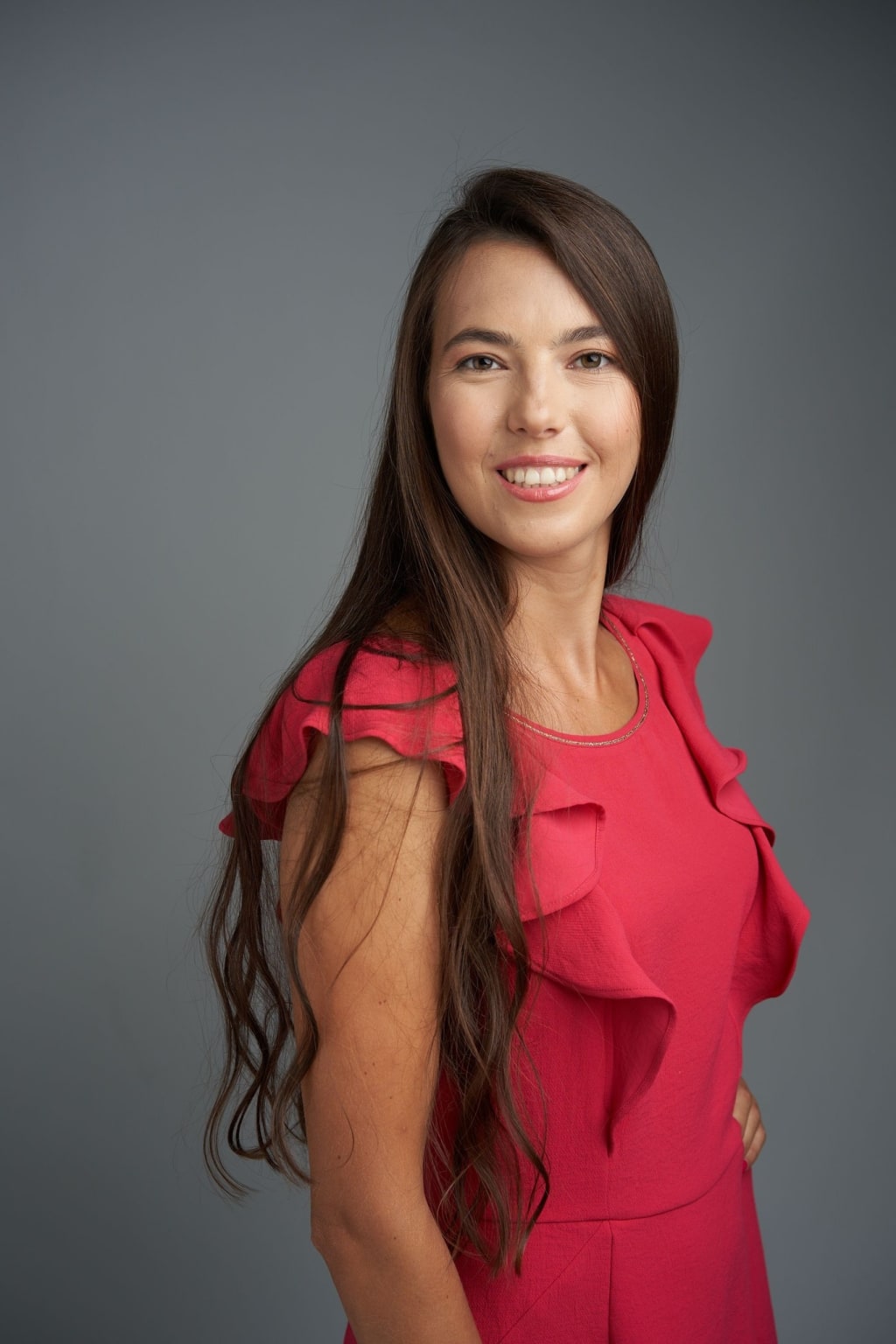
Anna Vlasenko is a Kyiv-based Ukrainian journalist, media producer, and fixer who has reported on Russia’s full-scale invasion for international outlets. Public profiles identify her work with German broadcaster ARD and as a freelance writer for The Globe and Mail. Her bylines also appear in Global News, including field reporting from liberated villages, civilian convoy attacks, and war-crimes investigations in 2022. In 2023, she was shortlisted for the Kurt Schork Awards’ News Fixer category, recognition reserved for journalists and fixers covering conflict, corruption, and injustice. Her work sits at the intersection of local knowledge, frontline reporting, and cross-border production today.
In this interview, Scott Douglas Jacobsen and Anna Vlasenko examine how Canadian, German, and Ukrainian media approach war reporting. Vlasenko explains that Canadian outlets often favour short, human-centred segments, while German media use broader formats and give more space to political context. She notes that Ukraine’s local journalists frequently produce deeper reporting because they understand the terrain, networks, and lived realities better, even though they work with tighter budgets and greater access pressures. The conversation also considers ARD’s public-service model, the constraints created by war, and why foreign media can sometimes ask questions more openly than Ukrainian outlets in wartime.
Scott Douglas Jacobsen: When you work freelance for Canadian media and also produce for German media, some of that work involves reporting on Ukraine. What differences do you notice between Canadian media and German media? How do they report differently on the war in Ukraine? What about ARD?
Anna Vlasenko: Both media systems have professional standards and aim to report what is happening in the country and present it to a wider audience. That goal is common to both. The main difference appears in format. Canadian media tends to focus more on short news segments, usually two- or three-minute pieces that go directly to air. German media uses a wider range of formats. They produce short news segments as well, but they also create longer pieces for major broadcasts, such as extended journal-style reports that explore a larger story in depth. Language also creates a difference. German and English operate differently. I do not speak German. When I work for Canadian media, I can engage more deeply with the context because I am present throughout the production process. When working with German media, I participate in the same production stages, but translating materials from German into English or Ukrainian and back again requires additional time. That difficulty stems from my lack of proficiency in German. I also observe editorial differences. Canadian media often focuses on personal stories, while German media tends to emphasize political developments and the broader national context.
Jacobsen: Two parallel cases illustrate this. I have not written about the Proud Boys or Gavin McInnes, although I know the Proud Boys were founded in 2016 by Gavin McInnes, a Canadian-born media figure, and later became far more prominent in the United States. Many people treat it as a purely American phenomenon, but its origins are partly Canadian. I have also written about Germany’s domestic intelligence agency's investigation into the Alternative for Germany (AfD). In 2025, the Federal Office for the Protection of the Constitution classified the party as a right-wing extremist organization after a multi-year review. That designation was then challenged in court, and in February 2026, a German court temporarily barred the agency from publicly describing the party that way until the legal dispute is resolved. [Ed. Not to be confused with ARD, which is Germany’s public-service broadcasting consortium, not a political party.] When examining political extremism, do you notice differences in how German media and Canadian media report on these movements?
Vlasenko: I cannot compare them fairly. The reason is that I am not deeply involved in political reporting in that specific area. With Canadian media, we did not do that kind of work in the same way. We conducted some interviews with prominent figures, of course, but it was not the same as the work we did with German media, where we would take one story and go as deeply into it as possible. So, it is different. In general, it would not be accurate to make a direct comparison in my case.
Jacobsen: Is there more public funding for media in Germany or in Canada?
Vlasenko: I did not work with public media in Canada. I worked with private media, such as Global News. ARD, by contrast, is public media. It is funded primarily through Germany’s public broadcasting licence fee system, so it operates within a very different model of financial support. The same distinction applies when comparing private Canadian outlets such as The Globe and Mail with German public broadcasters.
Jacobsen: How does Ukrainian media differ from either of those, particularly under wartime conditions?
Vlasenko: Unfortunately, Ukrainian media generally have fewer financial resources. When I work for Canadian or German media, we often have the financial capacity to travel to the places we need to reach. I mean financially, not in terms of access. For one story, we might travel and work on it for a week, with hotels, food, and related costs covered. Ukrainian media often do not have that kind of budget, which would allow a large team to travel and spend extended time on a story. That affects the material. At the same time, Ukrainian reporting can often be much deeper than Canadian or German reporting because Ukrainian journalists know the context better, have stronger local networks, and understand the situation from the inside. In general, that local knowledge makes a significant difference.
Jacobsen: What can Ukrainian media learn from German production or from Canadian print media?
Vlasenko: It depends on what kinds of media we are comparing. Suppose you say “Ukrainian media,” which includes many different forms: radio, television, and online media. If we compare print or online newspapers with television, the comparison is not entirely precise. Structurally, there may be some similarities, but the financial levels are very different. I am not sure if it is only a matter of learning from foreign media. It is also the reality in Ukraine at the moment that foreign media can sometimes do more than Ukrainian media can. I mean, they can sometimes speak more publicly and more openly about what is happening inside the country. They can ask direct questions without the same level of concern about access.
Ukrainian media also need to carefully consider which questions to ask and which topics to emphasize. For example, if you look at the United News telethon, you can see the kind of product it is. I am not saying it is always bad; there are good stories there as well. But it is a very specific kind of wartime media product. I am not deeply involved in the internal production side of Ukrainian media, so I cannot speak in detail about how every newsroom operates. What I can say with confidence is that Canadian and German journalistic standards place strong emphasis on respecting the terms of an interview. If someone says no, that means no. It does not matter who we are interviewing; we do not push past that. In Ukraine, if media outlets handle certain situations the same way, they may risk not being invited to future off-the-record briefings or certain events. Unfortunately, that is part of the current reality.
Jacobsen: Do you think most media restrictions in Ukraine come from martial law and battlefield security concerns, such as protecting geolocations and military positions? Or are there also cultural or institutional factors that still limit some forms of media expression? For example, might Ukrainian journalists feel more hesitation than a foreign journalist who comes here for a short time, perhaps six weeks?
Vlasenko: It depends. Some Ukrainian journalists are skeptical of foreign media because many arrive for a short period, report on events without fully understanding the context, and then leave. Ukrainian journalists know the context much better and can often explain events in greater depth. At the same time, some foreign bureaus and correspondents have been based here for years and are deeply familiar with the situation. Those journalists can also report very accurately about what is happening. So the situation varies.
Jacobsen: How many Canadian media outlets have you encountered in Ukraine during the war?
Vlasenko: Only two: Global News and The Globe and Mail.
Jacobsen: How many people were involved? Was it just two individuals?
Vlasenko: No. At the beginning of the full-scale invasion in 2022, I worked with Global News. Our team consisted of five people: a television correspondent, an online correspondent, a cameraman, a producer, and a driver. Print teams are usually smaller. For The Globe and Mail, for example, a typical team would include a correspondent, a photographer, a driver, and a producer.
Jacobsen: There are not many Canadians here. I have not encountered any other Canadian journalists in Kyiv. I know of one prominent Canadian reporter, but he is usually here when I am not. I am not affiliated with a large institution like The Globe and Mail. I work in independent media as an independent freelance journalist, which the Canadian Association of Journalists classifies as my work.
Vlasenko: It largely comes down to financial resources. Reporting from abroad requires a significant budget. It is not only a matter of whether journalists want to cover the story. Media organizations must have the financial capacity to station people in another country. For example, if you read The Globe and Mail, they regularly publish stories about Ukraine, but many of those reports rely on international news agencies such as Reuters or the Associated Press.
Jacobsen: That is true. If you send journalists to a war zone, the major cost is often the travel itself. Getting reporters there can be expensive. Once they arrive, the costs can be lower. In my experience, the biggest expense is the journey—flights, buses, or trains to reach Kyiv or another city such as Kharkiv. Once you are on the ground, daily expenses are often relatively manageable. The next major cost comes when you travel home again. Thank you very much for the opportunity and your time, Anna.
Scott Douglas Jacobsen is a blogger on Vocal with over 130 posts on the platform. He is the Founder and Publisher of In-Sight Publishing (ISBN: 978–1–0692343; 978–1–0673505) and Editor-in-Chief of In-Sight: Interviews (ISSN: 2369–6885). He writes for International Policy Digest (ISSN: 2332–9416), The Humanist (Print: ISSN, 0018–7399; Online: ISSN, 2163–3576), Basic Income Earth Network (UK Registered Charity 1177066), Humanist Perspectives (ISSN: 1719–6337), A Further Inquiry (SubStack), Vocal, Medium, The Good Men Project, The New Enlightenment Project, The Washington Outsider, rabble.ca, and other media. His bibliography index can be found via the Jacobsen Bank at In-Sight Publishing comprised of more than 10,000 articles, interviews, and republications, in more than 200 outlets. He has served in national and international leadership roles within humanist and media organizations, held several academic fellowships, and currently serves on several boards. He is a member in good standing in numerous media organizations, including the Canadian Association of Journalists, PEN Canada (CRA: 88916 2541 RR0001), Reporters Without Borders (SIREN: 343 684 221/SIRET: 343 684 221 00041/EIN: 20–0708028), and others.
Image Credit: Anna Vlasenko.
About the Creator
Scott Douglas Jacobsen
Scott Douglas Jacobsen is the publisher of In-Sight Publishing (ISBN: 978-1-0692343) and Editor-in-Chief of In-Sight: Interviews (ISSN: 2369-6885). He is a member in good standing of numerous media organizations.
Keep reading
More stories from Scott Douglas Jacobsen and writers in Interview and other communities.
Rickard Sagirbay on Philosophy, Science, and Human Potential: or, Intelligence, Stoicism, and Spiritual Inquiry
Rickard Sagirbay is a Swedish author and online writer of Turkish family origin, born in 1984, who blends philosophy, metaphysics, science, and self-development. Active in niche high-IQ communities including OLYMPIQ, ISPE, and Mensa, he is a multilingual thinker interested in truth, logic, reincarnation, and human potential. His bibliography includes numerous self-published titles, among them "The AI-integrated Human Evolution" and "2150 The World Upside Down." Sagirbay emphasizes endurance, personal transformation, and intellectual growth, often framing life as a struggle through darkness toward greater insight, resilience, and evolving self-understanding in both mind and spirit over time.
By Scott Douglas Jacobsen4 days ago in Interview
How Enzo Zelocchi Is Building a Unique Path in Film Through Creativity, Business Insight, and Determination
The modern film industry is more dynamic and interconnected than ever before. With the rise of digital platforms, international collaborations, and independent productions, filmmakers today have new opportunities to shape their careers in unique ways. Among the emerging figures navigating this evolving landscape is Enzo Zelocchi, an Italian actor, filmmaker, and entrepreneur whose approach to cinema combines creativity with strategic thinking.
By Brian Smith4 days ago in Interview
The Story of Enzo Zelocchi and His Growing Presence in International Film, Media, and Entertainment
In the evolving world of global entertainment, new voices continue to emerge with fresh ideas and ambitious visions. Among these personalities is Enzo Zelocchi, an Italian-born actor, filmmaker, and entrepreneur who has steadily built a presence in the international film industry. Known for combining cinematic storytelling with business strategy and creative ambition, Zelocchi represents a modern type of creative professional—someone who moves between acting, production, and entrepreneurial projects.
By Brian Smith4 days ago in Interview
My First Time Skiing and I Got Lost, Alone, in the French Alps
Looking back, I can trace some of my life’s biggest adventures to a simple action from my sister. She’d introduced me to Tommy (a very long time ago), a colleague of hers, who had overshared his penchant for Italian-looking women, and I ticked that box.
By Chantal Christie Weiss4 days ago in Humans


Comments
There are no comments for this story
Be the first to respond and start the conversation.