
Yet Relent
Who knows? God may yet relent and with compassion turn from his fierce anger so that we will not perish.”

Jonah 3:6-10 (NIV)
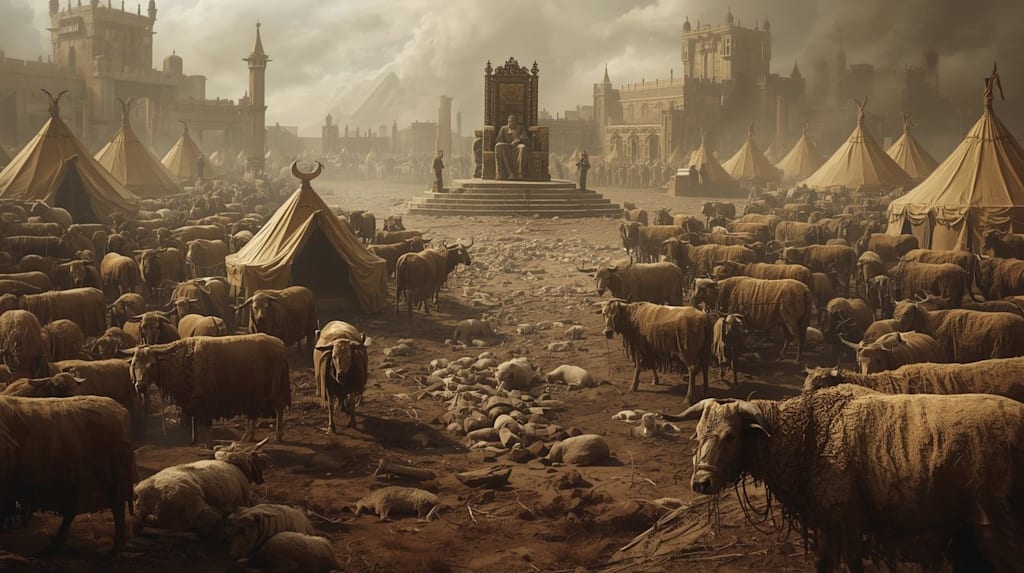
6 When Jonah’s warning reached the king of Nineveh, he rose from his throne, took off his royal robes, covered himself with sackcloth and sat down in the dust.
7 This is the proclamation he issued in Nineveh: “By the decree of the king and his nobles: Do not let people or animals, herds or flocks, taste anything; do not let them eat or drink.
8 But let people and animals be covered with sackcloth. Let everyone call urgently on God. Let them give up their evil ways and their violence.
9 Who knows? God may yet relent and with compassion turn from his fierce anger so that we will not perish.”
10 When God saw what they did and how they turned from their evil ways, he relented and did not bring on them the destruction he had threatened.
From the Throne to the Dust
The king of Nineveh had every reason to stay on his throne.
He was the most powerful man in the city. He had an army, a palace, nobles and servants. Whatever Jonah said walking through the streets, the king could have dismissed it. Could have had him arrested. Could have laughed it off and gone back to business as usual.
Instead he got up. Took off his robes. Put on sackcloth. And sat in the dust.
That is one of the most dramatic acts of humility in the entire Bible. A king literally coming down from his throne and sitting on the ground. Stripping off everything that marked him as powerful and important and replacing it with the clothing of repentance.
There is something about genuine conviction that does that to a person. When the weight of what God is saying actually lands — really lands, not just intellectually but in the gut — it is very hard to stay comfortable. The throne suddenly feels inappropriate. The robes feel wrong. The only right response is to get low.
God is not impressed by position or power. He is moved by humility. And the king of Nineveh, one of the most powerful rulers of his time, understood that better in that moment than most people ever do.
The Whole City
What happened next is remarkable.
The king did not just repent privately. He issued a decree. The whole city — people and animals alike — would fast and pray and call urgently on God. He took his personal conviction and turned it into a corporate call to return.
Nineveh was not a small town. This was one of the largest cities in the ancient world. And the king’s response to one prophet’s warning set the entire city on its knees.
Leadership matters. What the person at the top does sets the tone for everyone around them. When the king sat in the dust the whole city sat with him. When he called urgently on God the whole city followed.
This works in smaller ways in our own lives too. When we are willing to be honest about our need for God — in our families, our friendships, our workplaces — it gives permission to the people around us to do the same. Humility is contagious in the best possible way. One person willing to get low can bring a whole room down from its throne.
Who Knows
The king’s words in verse 9 echo something we saw earlier in Joel.
Who knows? God may yet relent.
There is real honesty in that. The king is not making promises about how God will respond. He is not claiming a formula that guarantees a certain outcome. He is simply saying — we do not know for certain what God will do. But we know what kind of God He is. And a God who is compassionate is worth throwing ourselves on.
Who knows is not a statement of doubt. It is a statement of faith in God’s character rather than faith in a guaranteed outcome.
That is actually a mature and honest kind of faith. Not — if I do the right things God has to respond the way I want. But — I do not know exactly what God will do. But I know He is compassionate. And that is enough reason to turn.
Sometimes that is the most honest prayer we can pray. I do not know what you will do Lord. But I know who you are. And who you are is enough.
What God Saw
Verse 10 is simple and direct.
When God saw what they did and how they turned from their evil ways, he relented.
Notice what God looked at. Not just what they said. Not just the sackcloth and the fasting and the outward signs of repentance. What they did. How they turned.
The turning was real. The repentance had substance behind it. And God who sees everything — not just the surface but the heart underneath the surface — saw that it was genuine.
This connects back to what we read in Joel. Rend your heart and not your garments. The outward signs matter insofar as they reflect something real happening on the inside. God is not moved by performance. He is moved by genuine turning.
Nineveh turned. Really turned. Gave up their evil ways and their violence. And God saw it and responded with compassion.
That is the God we serve. He does not look for reasons to bring destruction. He looks for genuine turning and responds with mercy every single time He finds it.
The Destruction That Did Not Come
The last line of this passage carries enormous weight.
He relented and did not bring on them the destruction he had threatened.
The destruction was real. The threat was not empty. Forty days and Nineveh will be overthrown — Jonah had said it walking through the streets. The danger was genuine and the timeline was specific.
And then it did not happen.
Not because God changed His mind arbitrarily. But because the people changed. The turning was real and the mercy followed the turning as surely as the sun follows the night.
This is one of the clearest pictures in all of Scripture of God’s heart. He is not in the business of destruction for its own sake. Judgment is always the last resort of a God who has been reaching out and calling and warning and waiting for a long time before it comes to that.
What He wants is always the turning. Always the return. Always the people coming back to Him so that the destruction never has to arrive.
The city that should have been overthrown became the city that God had compassion on. Because one prophet walked through its streets and the people actually listened.
It Is Not Too Late
This passage is a reminder that the warning is always an act of mercy.
God did not send Jonah to Nineveh to announce an outcome that was already sealed. He sent him because the door was still open. Because the turning was still possible. Because the destruction had not come yet and He wanted it not to come.
Every time God speaks a word of conviction into our lives — through His Word, through a sermon, through the quiet voice of His Spirit pressing on something we have been trying to ignore — that is an act of mercy. That is God sending Jonah through the streets of our hearts and saying it is not too late. The door is still open. The turning is still possible.
The king of Nineveh could have stayed on his throne. He chose the dust instead.
And the destruction never came.
Walk On
Get off the throne today.
Whatever God has been pressing on. Whatever the sackcloth moment looks like for you right now. Who knows — He may yet relent and with compassion turn.
He is looking for the turning. Give it to Him. 🤍
If this reflection spoke to you, consider subscribing to follow along my journey of faith, meditation, and rebuilding — one day at a time. Your support truly means more than you know ❤️
About the Creator
Reborn Jem
Life has its highs and lows and often, it’s in those extremes that we find who we truly are. A record of meditation, spiritual lessons and real-life struggles as I learn to quiet the noise and listen again to God’s voice.
Keep reading
More stories from Reborn Jem and writers in Humans and other communities.
Why Wicked: For Good is Undeservingly the ‘worse movie’
So… off the bat, we’re about to delve into something ridiculous. Just so we’re clear on that, ok? The first thing anyone that knows a thing about these dual movies… knows… is the original movie and sequel were shot together.
By Gabriel Shames7 days ago in Humans
My Grandmother's Secret Recipe
The Truth Behind the Family Dish That Held Us Together THE RECIPE NOBODY COULD REPLICATE 👵 For forty years my grandmother's chocolate cake was the centerpiece of every family gathering, a dense, rich, impossibly moist creation that she produced from her kitchen with the same magical consistency at every birthday, holiday, wedding, and funeral, and the recipe was the most closely guarded secret in our family, requested by every daughter, daughter-in-law, and grandchild and refused every time with the mysterious smile of someone who knows exactly what they have and what it is worth, and the cake became more than a dessert, it became the symbol of our family's identity, the thing that made us us, the edible proof that we belonged to each other because only we had access to this specific magnificent cake that outsiders could never taste and insiders could never replicate 🎂
By The Curious Writera day ago in Humans




Comments
There are no comments for this story
Be the first to respond and start the conversation.