
The New Face of Viking Heroism
How modern research and storytelling are reshaping the legacy of women in the Viking Age

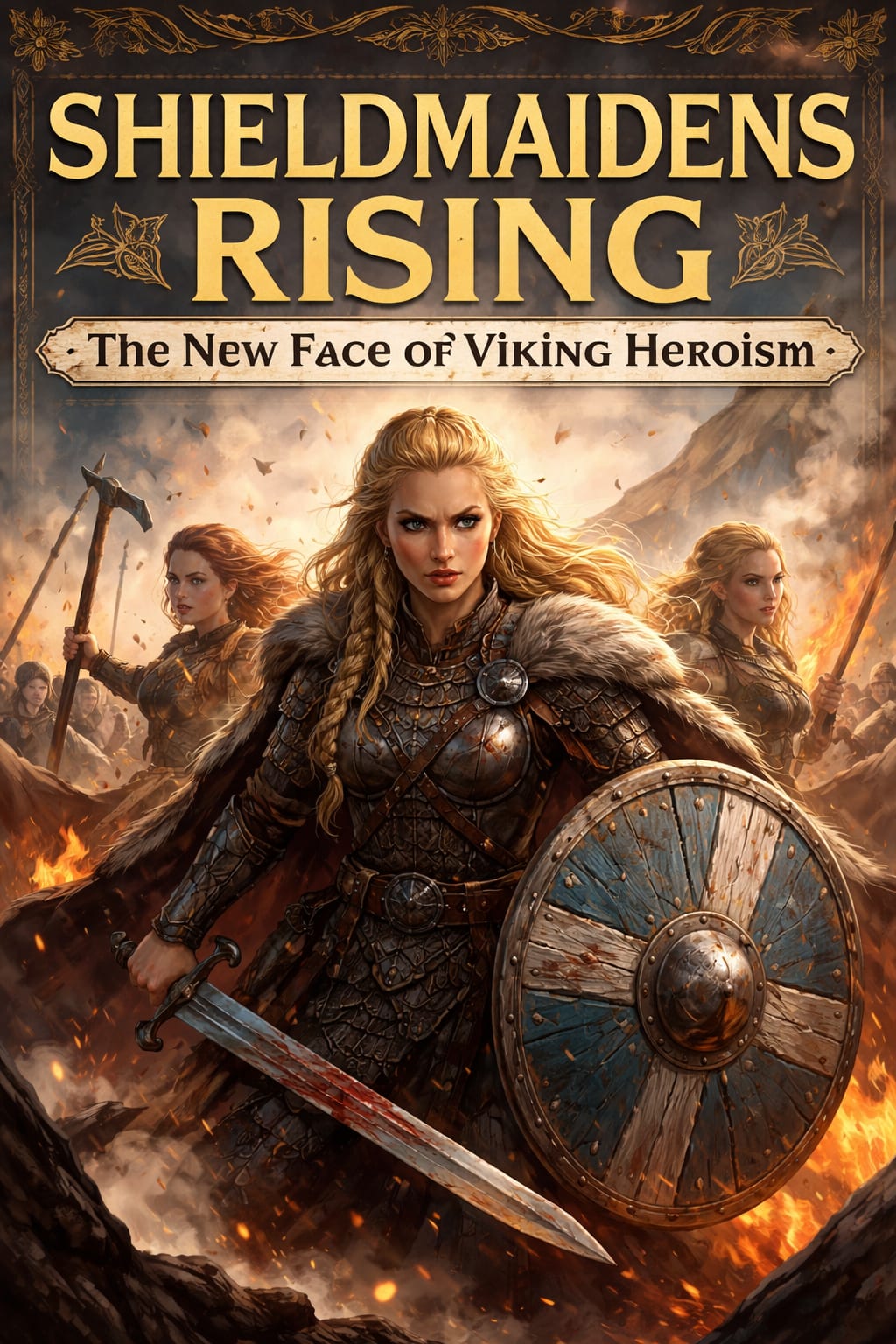
For centuries, the Viking Age has been dominated by images of bearded warriors, longships cutting through icy seas, and brutal raids across Europe. Popular culture—from films to textbooks—has long framed this era as a world built by men. Yet a growing body of archaeological discoveries and historical reinterpretations is challenging that narrative. Today, a new kind of Viking hero is emerging: women.
The idea of female Viking warriors is not entirely new. Norse sagas and myths have long mentioned shieldmaidens—women who fought alongside men in battle. Legendary figures like Lagertha and the Valkyries, divine choosers of the slain, have existed in Scandinavian storytelling for centuries. However, these accounts were often dismissed as symbolic or mythical rather than historical reality.
That perception began to shift dramatically in recent years. One of the most significant turning points came with the reexamination of a famous Viking grave discovered in Birka, Sweden. Initially believed to belong to a high-ranking male warrior due to the presence of weapons, horses, and tactical game pieces, DNA analysis later revealed that the individual was, in fact, a woman. This discovery sent shockwaves through the academic world, forcing historians to reconsider long-held assumptions about gender roles in Viking society.
The Birka grave is not an isolated case. Other archaeological findings, though less prominent, suggest that women in the Viking Age may have had more diverse roles than previously thought. While not all women were warriors, evidence indicates that some held positions of power, influence, and even military responsibility. They managed farms, oversaw trade, and, in rare cases, may have participated directly in combat.
Beyond archaeology, modern scholarship has also begun to reinterpret historical texts with fresh eyes. Earlier historians, often influenced by their own cultural biases, may have downplayed or ignored references to female warriors. Today’s researchers are more open to the possibility that these accounts reflect real aspects of Viking life, even if they are partially embellished.
At the same time, the rise of women as Viking heroes is not limited to academia—it is also a cultural phenomenon. Television series, novels, and games have embraced strong female Viking characters, bringing them into the mainstream. These portrayals, while sometimes dramatized, have helped spark widespread interest in the real history behind the legends.
Importantly, this shift is about more than just adding women to the battlefield. It reflects a broader effort to understand Viking society in its full complexity. Women were not merely passive figures waiting at home; they were active participants in shaping their communities. From managing resources to influencing political alliances through marriage and kinship, their contributions were essential to the survival and success of Viking settlements.
The renewed focus on Viking women also resonates with modern audiences. In a world increasingly interested in uncovering overlooked histories, the story of female Vikings offers both inspiration and correction. It challenges outdated stereotypes and highlights the importance of questioning historical narratives that have long gone unexamined.
However, it is important to approach this topic with balance. Not every Viking woman was a warrior, and the majority likely lived lives centered around family, agriculture, and craft. The danger lies in replacing one oversimplified image with another. Instead, the goal is to recognize the diversity of experiences that existed within Viking society.
In the end, the emergence of women as heroes of the Viking Age is less about rewriting history and more about completing it. By combining archaeological evidence, literary analysis, and cultural interpretation, historians are gradually painting a richer, more nuanced picture of the past.
The Viking Age, it seems, was never just a man’s world. And as new discoveries continue to surface, the stories of its women—warriors, leaders, and survivors—are finally taking their rightful place alongside those of their male counterparts.
About the Creator
Irshad Abbasi
Ali ibn Abi Talib (RA) said 📚
“Knowledge is better than wealth, because knowledge protects you, while you have to protect wealth.
Keep reading
More stories from Irshad Abbasi and writers in History and other communities.
What You Don’t Know About the Vikings
When most people hear the word “Vikings,” they imagine fierce warriors with horned helmets, storming coastal villages in longships and leaving destruction in their wake. While there is some truth to their reputation as skilled raiders, the real story of the Vikings is far more complex—and far more fascinating.
By Irshad Abbasi 6 days ago in History
The Boy Soldiers of Shiloh
When the Battle of Shiloh erupted on April 6, 1862, over ten thousand soldiers on both sides were under the age of eighteen, with the youngest confirmed combatant being nine-year-old Johnny Clem who picked up a musket taller than himself and charged Confederate positions, and by the time the two-day battle ended with 23,746 casualties, hundreds of these child soldiers lay dead or dying in the Tennessee mud, calling for their mothers while surgeons too overwhelmed to treat adults stepped over their broken bodies to reach soldiers they deemed more likely to survive.
By The Curious Writera day ago in History

Comments
There are no comments for this story
Be the first to respond and start the conversation.