
Rumours of a Pharaoh’s Curse Spark Panic After Ancient Sarcophagus Unearthed in Egypt
Social media and local reports spread unfounded fears of disaster after the opening of a 2,000‑year‑old coffin, but experts dismiss the “curse” and emphasise archaeological value.

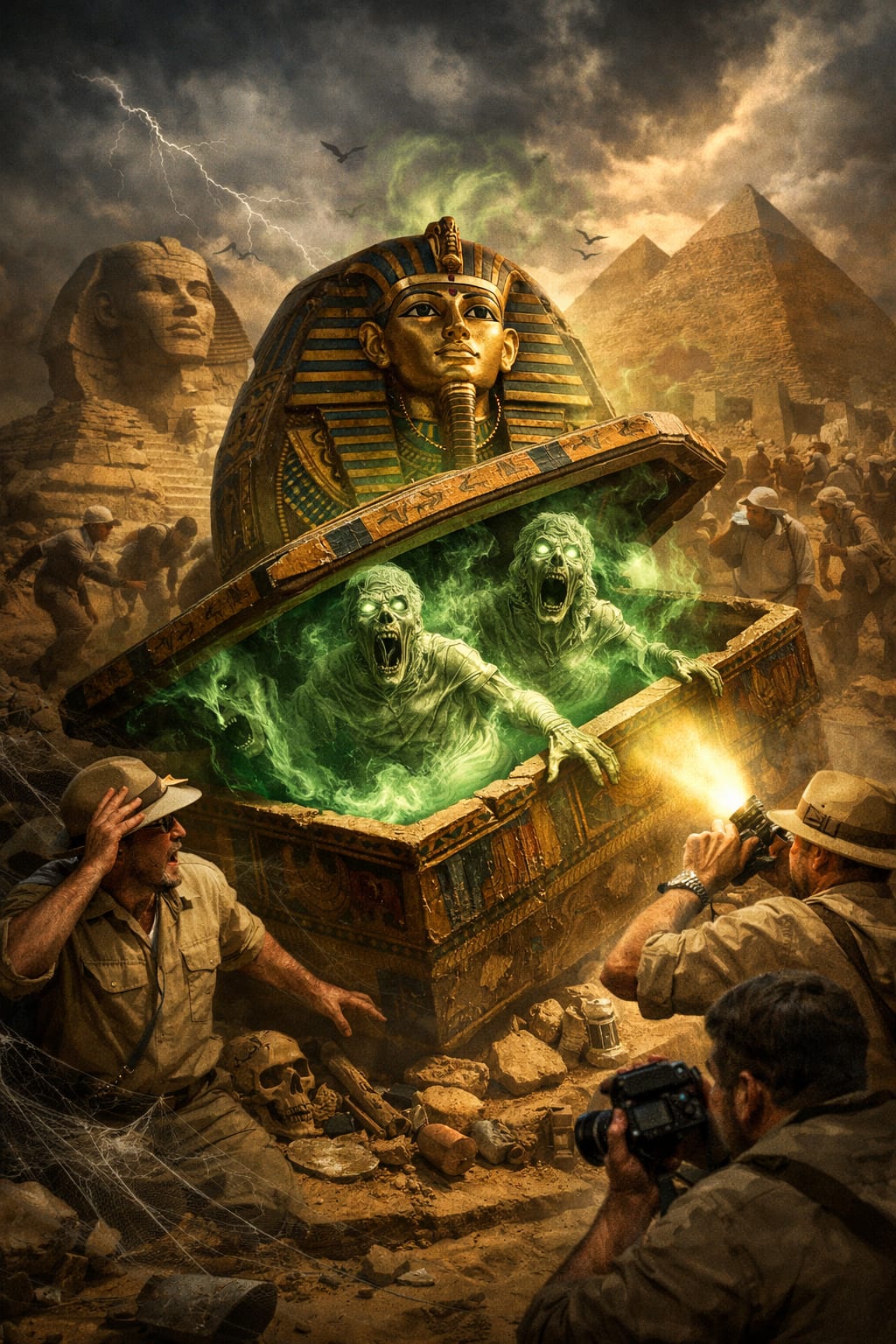
In recent days, a bizarre wave of rumours has swept across Egypt following the unveiling of an ancient stone sarcophagus, purportedly dating back to the time of the pharaohs. The rumours claimed that opening the coffin had unleashed a supernatural disaster or curse upon the country, igniting fear on social media and among local communities. However, experts in archaeology and Egyptology have firmly dismissed these claims as myths rooted in folklore rather than fact.
The object at the centre of the controversy was a massive black granite sarcophagus discovered in the Sidi Gaber district of Alexandria, Egypt. Previously buried for more than two millennia, the sealed coffin weighed around 27 tonnes and was thought by some to possibly contain the remains of a significant figure from ancient history, even sparking speculation that it might be linked to the elusive tomb of Alexander the Great.
Excavation teams, including specialists from Egypt’s Ministry of Antiquities, worked carefully to lift and open the enormous lid. Early rumours spread even before the lid was fully removed, fuelled by the strong, foul smell that emanated from within—a combination of decomposed organic matter and contaminated water, likely from nearby sewage infiltrating the tomb over centuries.
Local media and social networking platforms quickly amplified sensational claims that “an ancient disaster” or curse had been unleashed by disturbing the long‑sealed burial chamber. Some reports suggested that the tomb contained supernatural forces capable of bringing misfortune or illness to the living—echoing age‑old beliefs about pharaonic curses.
The idea of a curse associated with the tombs of ancient Egypt, commonly called the “curse of the pharaohs,” has long captured public imagination around the world. These myths often suggest that those who disturb the resting places of ancient rulers will face misfortune, illness, or even death. Stories of a curse became especially prominent after the 1922 discovery of Tutankhamun’s tomb, when some members of the excavation party and associates died in the years that followed—an event often sensationalised despite scientific explanations for those deaths.
Despite the dramatic rumours circulating online, authorities and archaeologists have sought to reassure the public. According to statements from Egyptian antiquities officials at the time of the find, once fully opened the sarcophagus revealed no treasure, no royal artefacts, and most importantly, no evidence of curses or disasters. Instead, it contained the skeletal remains of what appears to be a family group, possibly buried together, and no inscriptions or cartouches indicating a royal pharaoh.
Experts emphasise that claims of curses are cultural stories rather than historical or scientific realities. Egyptologist and officials have pointed out that the ancient Egyptians themselves sometimes included apotropaic texts—words intended to ward off evil—on tomb walls, but these were intended as protective measures within the context of their religious beliefs, not real curses capable of affecting modern life.
The spread of panic about supernatural disaster reflects broader patterns in global media and social networks, where dramatic interpretations often outpace verified facts. Archaeologists and officials urged people to await proper analysis rather than rely on speculation. The remains are now being studied to learn more about the individuals buried there, and what their burial tells us about life and death practices during the Ptolemaic era in Egypt.
Historians also note that many such rumours in the past were magnified by media eager for sensational headlines. For example, early 20th‑century news reports about Tutankhamun’s tomb embellished ordinary deaths into tales of curses, while later research showed that there is no direct evidence linking tomb openings to mysterious calamities.
In conclusion, while recent stories about a pharaoh’s coffin releasing a deadly force captured attention across Egypt, archaeologists maintain that there is no evidence for any curse or disaster having been unleashed. Instead, the find is another valuable piece in the puzzle of ancient Egyptian history—offering insight into burial customs and lifeways of people from centuries past, rather than harbouring supernatural peril. 
About the Creator
Irshad Abbasi
Ali ibn Abi Talib (RA) said 📚
“Knowledge is better than wealth, because knowledge protects you, while you have to protect wealth.
Keep reading
More stories from Irshad Abbasi and writers in History and other communities.
Did Alexander the Great’s Beloved Plot to Drown Him?
The life of Alexander the Great, the legendary Macedonian conqueror, is filled with extraordinary military campaigns, political intrigue, and legendary romances. Among these tales, one of the most enduring—and controversial—is the story involving his wife, Roxana of Bactria. According to some historical anecdotes and later legends, Roxana, the young and beautiful princess whom Alexander married during his campaigns in Central Asia, may have harbored intentions of betrayal. One particularly dramatic narrative claims that she tried to drown him—a story that continues to captivate historians and storytellers alike.
By Irshad Abbasi about 12 hours ago in History
The Book Nobody Can Read
Yale University's library contains a 240-page medieval manuscript filled with unknown plants, bizarre astronomical diagrams, and mysterious text written in a language that has defeated every code-breaker, linguist, and artificial intelligence program ever created.
By The Curious Writerabout 7 hours ago in History


Comments
There are no comments for this story
Be the first to respond and start the conversation.