
On the Ancient Silk Road, a Walk Shadowed by a Mystery
Tracing forgotten paths, lost travelers, and the enduring secrets hidden along history’s greatest trade route

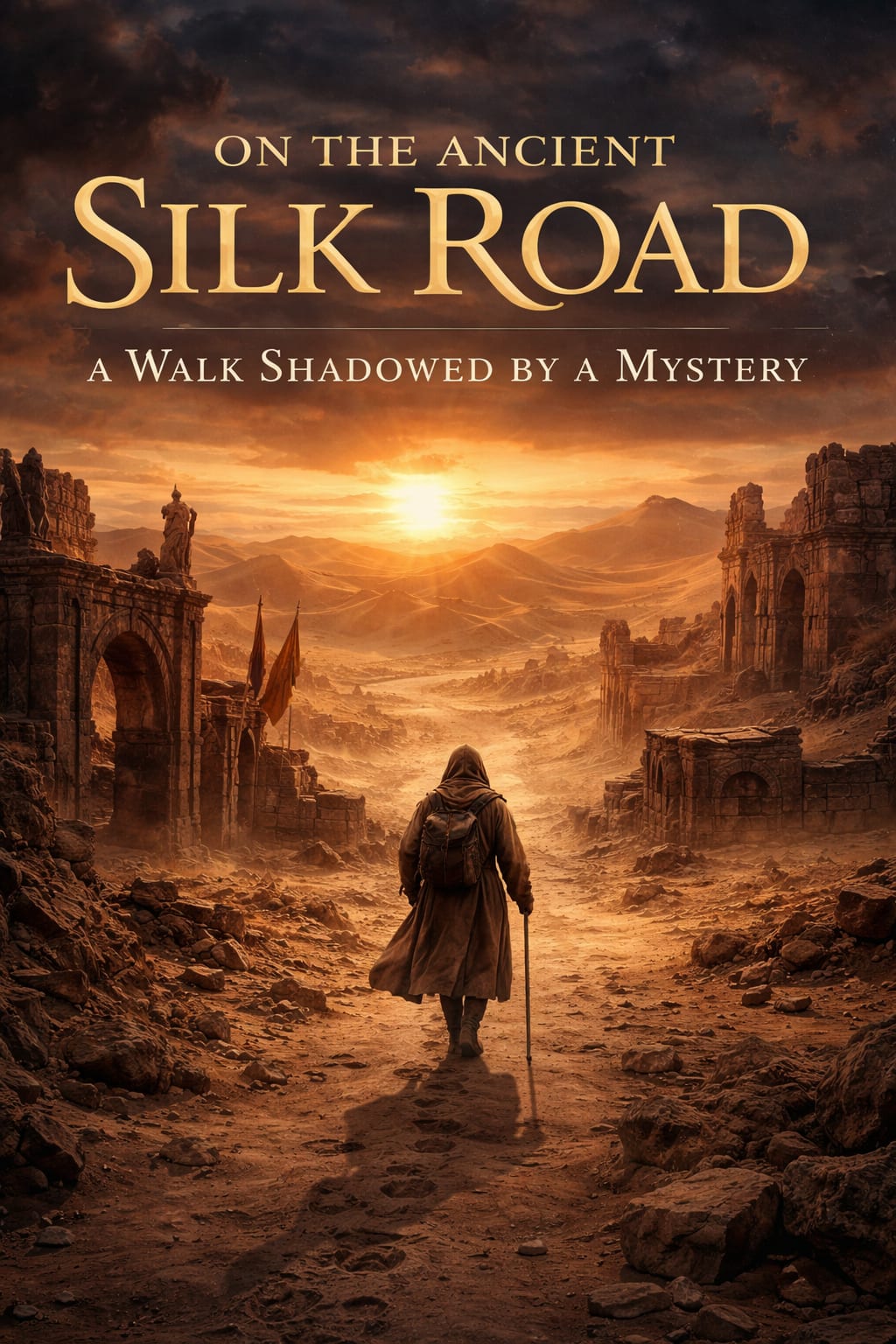
The Silk Road has long been celebrated as one of history’s most important arteries of commerce and culture. Stretching thousands of miles from East Asia to the Mediterranean, it was not a single road but a vast network of interconnected routes that carried silk, spices, ideas, religions, and people across continents. Yet beneath its legacy of exchange and prosperity lies a quieter, more haunting story—one of mystery, disappearance, and unanswered questions.
To walk along the remnants of the Silk Road today is to step into a world where history feels alive, but incomplete. Crumbling caravanserais dot the deserts, abandoned watchtowers stand guard over empty plains, and ancient cities whisper tales that have never been fully told. For centuries, travelers braved harsh climates, treacherous terrain, and unpredictable dangers. Some reached their destinations and etched their names into history. Others vanished without a trace.
One of the enduring mysteries of the Silk Road lies in the fate of those who disappeared along its routes. Historical records mention caravans that set out with dozens of merchants and guards, only for a fraction to arrive. Bandits, sandstorms, disease, and political conflicts all played a role. However, in some cases, there were no signs of struggle—only silence.
The Taklamakan Desert, often referred to as the “Sea of Death,” was particularly notorious. Its shifting sands have swallowed entire settlements and preserved others in eerie stillness. Archaeologists have uncovered remarkably well-preserved mummies buried beneath the desert, their origins and identities still debated. Who were these people? Traders? Settlers? Or victims of a journey gone wrong? The answers remain elusive.
Adding to the intrigue are the stories recorded by famous travelers like Marco Polo. While his accounts of the Silk Road opened Europe’s eyes to the wonders of the East, they also hinted at strange and unsettling occurrences—desolate stretches where voices seemed to echo in the wind, leading travelers astray. Whether these were natural phenomena or embellishments, they contributed to the road’s aura of mystery.
The Silk Road was not just a physical journey; it was also a cultural and spiritual one. Religions such as Buddhism, Islam, and Christianity spread along these routes, carried by monks, missionaries, and scholars. With them came stories, myths, and beliefs that blended and evolved. Some historians suggest that these cultural exchanges may have contributed to the mysterious narratives surrounding the road—transforming real dangers into legends that persist to this day.
Lost cities further deepen the enigma. Places like Niya, Loulan, and Merv once thrived as bustling hubs of trade and civilization. Today, they stand in ruins, their decline attributed to shifting trade patterns, environmental changes, or political upheaval. Yet, in many cases, the exact reasons for their abandonment remain unclear. Why would a prosperous city suddenly be deserted? What forced entire populations to leave behind homes, goods, and even personal belongings?
Modern technology has allowed researchers to uncover new clues. Satellite imagery, ground-penetrating radar, and advanced dating techniques have revealed hidden structures and burial sites. Still, each discovery often raises more questions than answers. The Silk Road resists simple explanations, as if guarding its secrets against the passage of time.
Perhaps the greatest mystery of all is not about what happened along the Silk Road, but how it continues to captivate us. In an age of instant travel and digital connectivity, the idea of a journey filled with uncertainty and discovery holds a powerful allure. The Silk Road represents both the triumph of human connection and the fragility of those who dared to traverse it.
Walking its ancient paths today, one cannot help but feel a sense of wonder mixed with unease. The wind carries grains of sand across forgotten roads, and the silence speaks louder than any story. Somewhere beneath the surface lie the untold histories of those who traveled, traded, and disappeared.
The Silk Road endures not only as a symbol of exchange but as a reminder that history is never complete. Some stories are preserved in books and ruins, while others remain hidden—waiting, perhaps forever, in the shadows of a road that once connected the world.
About the Creator
Irshad Abbasi
Ali ibn Abi Talib (RA) said 📚
“Knowledge is better than wealth, because knowledge protects you, while you have to protect wealth.
Keep reading
More stories from Irshad Abbasi and writers in History and other communities.
Making Sense of the Pyramids’ Enduring Mysteries
Few structures in human history inspire as much awe and curiosity as the pyramids of ancient Egypt. Towering above the desert sands for thousands of years, these monumental creations—especially the Great Pyramid of Giza—have become symbols of both human ingenuity and enduring mystery. Despite centuries of study, many aspects of their construction, purpose, and meaning continue to spark debate among historians, archaeologists, and enthusiasts alike.
By Irshad Abbasi 6 days ago in History
Calakmul: The Three Stones and Two Pyramids of the Ancient Maya City
Calakmul is a genuinely lost ancient Maya city. It is located on the Yucatan Peninsula of Mexico, deep within the Petén Basin's lush forests. The magnificent metropolis was quickly recovered by the jungle once it was abandoned.
By Francis Dami7 days ago in History
The Peloponnesian War
In 430 BCE, the golden age of Athens ended not with a military defeat but with a mysterious plague that killed a quarter of the population including the great statesman Pericles, turning the world's most advanced civilization into a city of corpses stacked in temples and burning in the streets while survivors abandoned morality and law because they believed they were all going to die anyway, and the description by historian Thucydides remains so detailed that modern epidemiologists are still trying to identify what disease destroyed Athens from within while Sparta waited patiently outside the walls.
By The Curious Writera day ago in History


Comments
There are no comments for this story
Be the first to respond and start the conversation.