
"History’s Deadliest Auction: THE MAN WHO BOUGHT ROME"
Theme: Greed, Power, and a Brutal End.

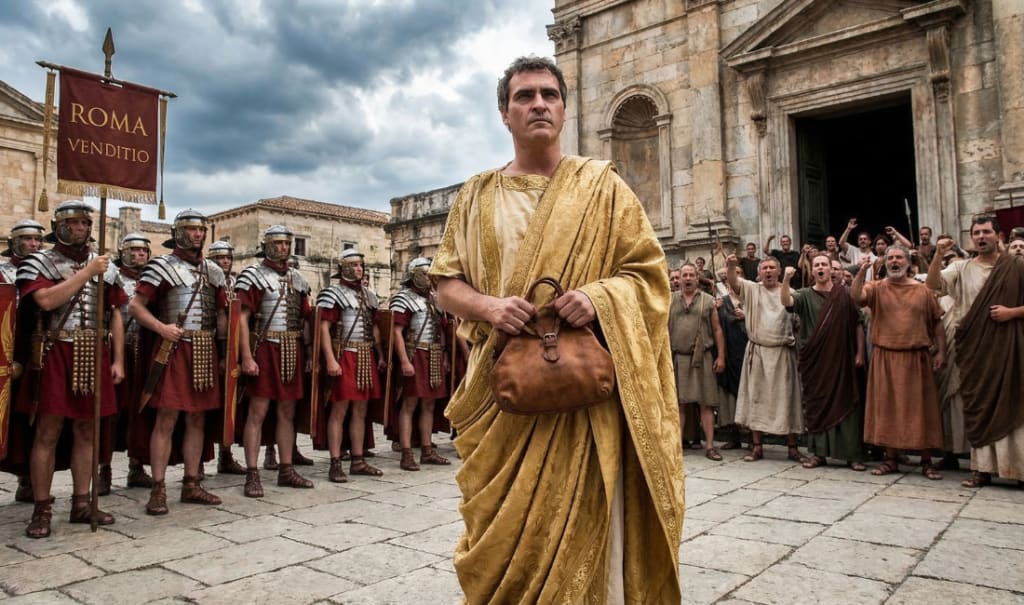
"Did you know there was a day in history when the entire Roman Empire was put up for sale to the highest bidder? No elections, no wars—just a literal auction for the world's greatest superpower. And the man who bought it? He paid the highest price in history... but not just in gold."
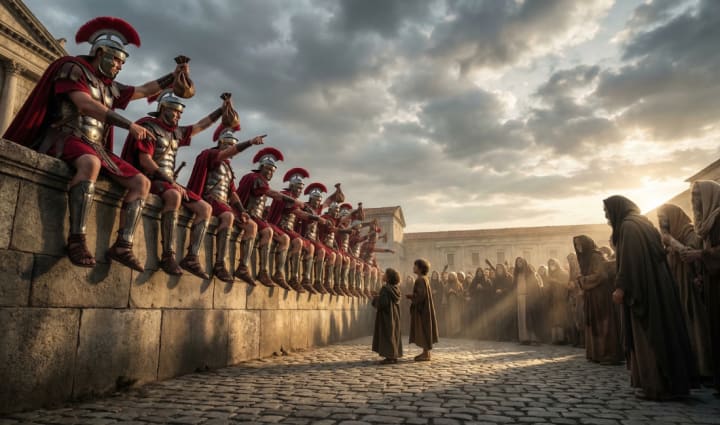
"The year was 193 AD. The Emperor had been assassinated, and the Praetorian Guard—the elite soldiers—didn't want a new leader. They wanted money. So, they stood on the walls of the palace and shouted: 'The Empire is for sale! Who wants it?'"
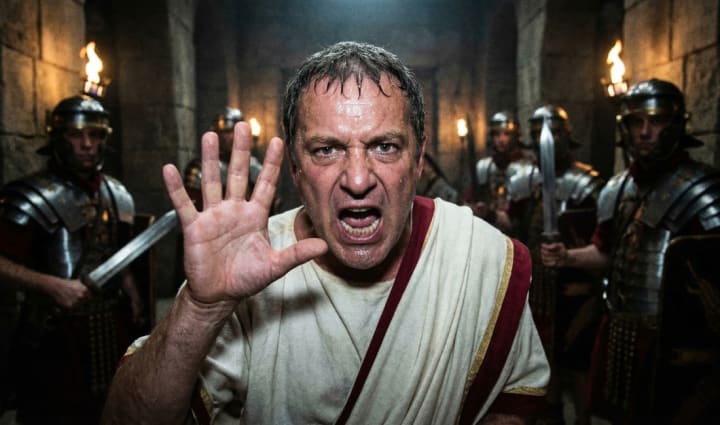
"The air in Rome that day wasn't filled with the scent of incense or celebration; it smelled of dust, sweat, and the cold metallic tang of gold. As the gates of the Praetorian camp groaned open just a crack, the world witnessed something that should have been impossible.
Didius Julianus wasn't just a senator; he was a man consumed by the intoxicating scent of ultimate power. He stood before the massive stone walls, looking up at the soldiers who held the fate of the world in their hands. On his left stood Sulpicianus, his rival, already shouting numbers that would bankrupt entire cities. But Julianus had a secret weapon: an ego that knew no bounds and a treasury that seemed bottomless.
'Five thousand sesterces per man!' Sulpicianus roared. The soldiers cheered, their shields clashing like thunder.
But Julianus didn't flinch. He stepped forward, his golden toga dragging in the Roman dirt, and raised his hand. 'Six thousand!' he screamed back. The bidding wasn't just about money anymore; it was a psychological battlefield. He began to describe the luxury they would live in, the wine they would drink, and the glory they would share under his reign.
He wasn't just buying a title; he was purchasing the blades of the most elite killers in the world. With every thousand sesterces he added to the bid, he was digging a deeper grave for his own future. The soldiers looked at each other, their greed reflected in the cold blue light of the morning. When Julianus finally hit the staggering price of 25,000 sesterces per soldier, the silence that followed was deafening. Sulpicianus could not follow.
In that moment of triumph, Julianus felt like a God. He had outbid the Senate, outbid his rivals, and effectively bought the legacy of Caesar with a checkbook. But as the gates fully opened to welcome their 'New Emperor,' the look in the soldiers' eyes wasn't one of loyalty—it was the look of a predator who had just found a very wealthy prey."
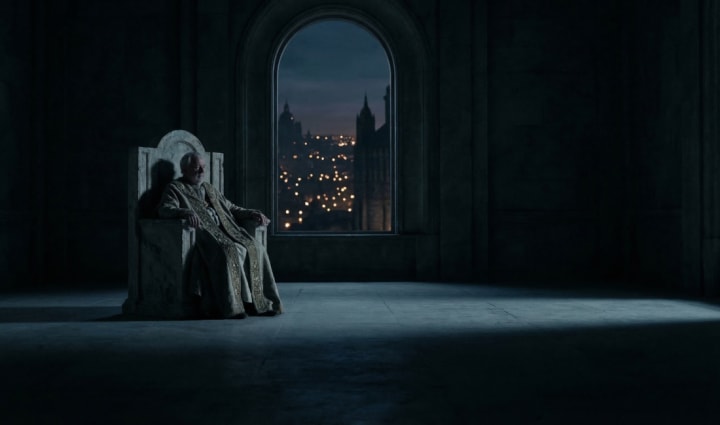
"But there was a problem. You can buy a throne, but you can’t buy loyalty. The Roman people hated him. The armies in the provinces were furious. While Julianus was sitting in his palace, three different generals declared war on him. He had no army, no support, and soon... no money left."

"Julianus ruled for only 66 days. When the real soldiers arrived at the palace gates, his own guards abandoned him. He was found crying in a corner of the palace. His last words? 'But what evil have I done? Whom have I killed?'"
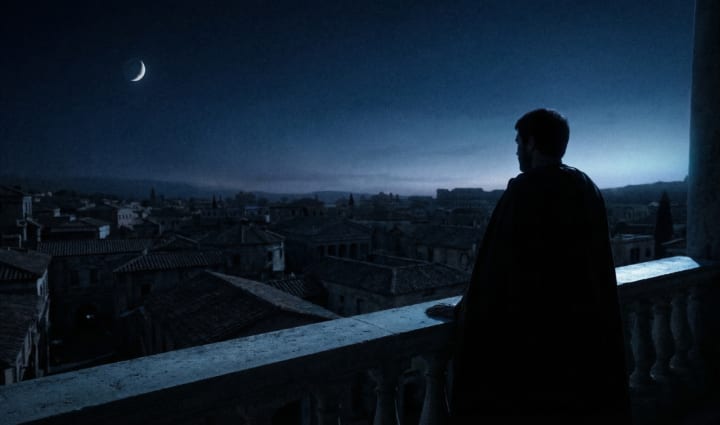
"The lesson? Power that is bought is never power that is kept. Didius Julianus learned the hard way that while gold can buy a chair, it can never buy the ground it stands on. He died for a title he only held for two months, proving that in the eyes of history, a crown without character is just a heavy target.
Even today, in our world of digital influence and instant status, we see this ancient truth repeated: true authority isn't a transaction; it's an earned legacy. Julianus remains a historical ghost, a warning that wealth can build a palace, but it can never build a home for the soul.
Tell me... in a world where almost everything has a price tag, what is the one thing money still can't buy in today's world? Drop it in the comments below."
......................Ask..........To..........Yourself......................
About the Creator
Its_Shani
Hello, I’m Shani — a storyteller who believes every idea has the power to become a meaningful story. I write emotional, inspirational, and creative narratives that explore life, imagination, and human connections.I hope you read and enjoy.
Aunt Sophie Campbell, A Smoky Mountain Legend in Appalachia
In the heart of the Great Smoky Mountains lived a woman whose legacy endured long after her passing, a woman who embodied the spirit of rugged ridges, mountain folklore, and genuine hospitality. Her name was Aunt Sophie Campbell, one of the most beloved figures in the region. Known for talent, warmth, and resilience, Aunt Sophie became a true Smoky Mountain legend.
By Tim Carmichael3 days ago in History



Comments
There are no comments for this story
Be the first to respond and start the conversation.