
The A.I. Doc Review: “Down the Stack” Optimism and the Illusion of a Tech-Saved Future
A critical review of The A.I. Doc or How I Became an Apocaloptimist, examining tech industry optimism, “down the stack” thinking, and the illusion that artificial intelligence will solve humanity’s biggest problems.

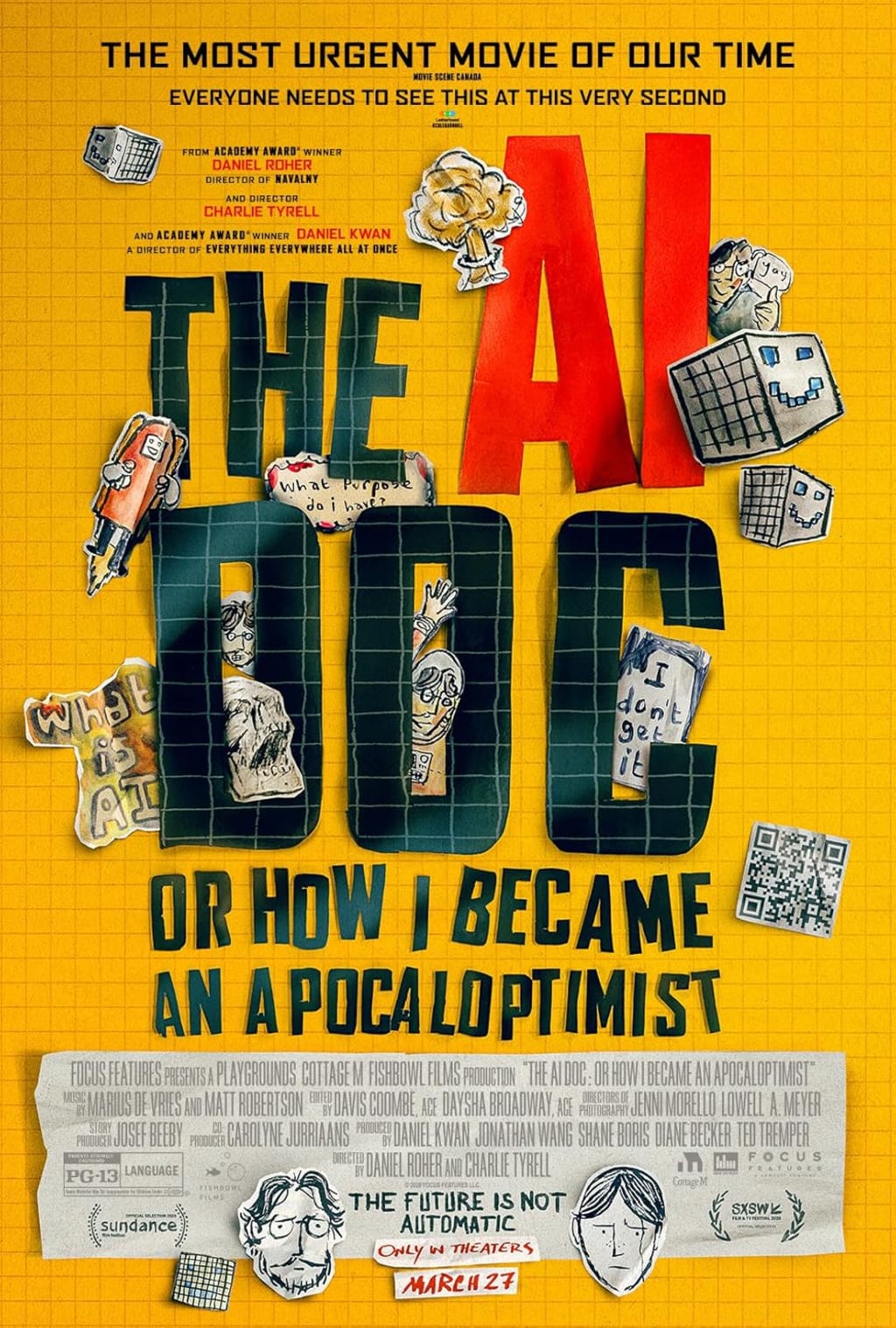
Title: The A.I. Doc or How I Became an Apocaloptimist
Directed by: Daniel Roher, Charlie Tyrell
Written by: Daniel Roher
Starring: Sam Altman, Dario Amodei, Daniela Amodei
Release Date: March 27, 2026
The Seduction of “Down the Stack” Thinking
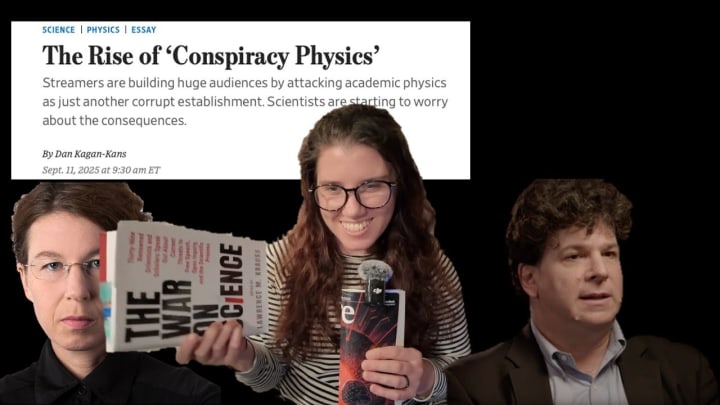
Recently I’ve been binge watching the videos of physics YouTuber Angela Collier. Collier is a brilliant physicist and her love of physics is fun to experience. She’s exceptional at making complicated physics ideas accessible to people like me who have never studied physics before. She also has a wonderful side gig debunking the very silly things that tech bro A.I enthusiasts say.
She recently posted a video talking about a podcast interview with the CEO of Zoom, the video meeting app. In the interview, the CEO of Zoom talked about how thanks to A.I in the future we will be able to send A.I avatars of ourselves to meetings we don’t want to go to and the A.I can have the meeting for us and then summarize the meeting so we can all sit on the beach.
He said this. Out loud. Into a microphone. And he didn’t stop to think how silly that sounded. He’s the CEO of a large company and he thinks that A.I is going to hold meetings and that employees won’t have to be there at all—the A.I can just summarize it all for them. Angela, seeming almost embarrassed, points out the many flaws of this idea. One of the simplest is that we don’t need A.I avatars to have in person meetings.
A.I avatars aren’t necessary. Not to mention, such avatars would require a massive new infrastructure that doesn’t currently exist. Servers that would need to hold the avatars, laws or guidelines as to who owns the avatar—the employee? The employer? If the avatar can do everything the employee can do then why would a company pay an employee?
But, the simplest and most devastating point to this discussion is that A.I doesn’t need avatars. If two A.I “avatars” were to have a meeting they don’t need a physical space, they don’t need to see each other. A meeting between two A.I versions of real people is non-existent. It would happen in seconds and the summary would arrive in seconds and there would be no meeting—A.I would simply take the available data contributed by both sides, summarize, and draw conclusions.
Of course, if A.I could do that—and we assume A.I is somehow correct—then what would you need an employee to do? Why would you pay a person for a job that A.I is doing without them? This plan makes no sense and yet, the CEO of Zoom sees this as the potential future of his company and of A.I.

Selling Solutions to Problems That Don’t Exist
So, the podcaster asked another basic question: is Zoom developing the A.I avatar technology? No, the technology doesn’t currently exist. But it will. It’s “down the stack.”
“Down the stack” is a fun little term that A.I bros like to use to say that someone is working on that and when they crack it, we will have it and it will be a game changer.
If someone tells you that something is “down the stack” they are basically saying that thing doesn’t exist but we hope it will at some point—and we’re already planning to have it.
Collier points to a current Zoom product promising Post-Quantum Encryption. When asked what that was, Zoom doesn’t actually know. It’s basically saying that one day in the future, Zoom will secure data against post-quantum computer hacks.
But we’re not in a post-quantum world. These problems—and their solutions—don’t exist. Zoom is essentially trying to sell you insurance for a hypothetical future.

A Documentary Built on Hypotheticals
This is a long preamble to take me into The A.I. Doc or How I Became an Apocaloptimist, Daniel Roher’s quite sad and unfortunate attempt to reckon with A.I by having a bunch of people with deeply vested interests in A.I tell him about what A.I will do in the future—that it hasn’t done yet—but might.
The documentary is basically the feature-length equivalent of “down the stack.”
Take climate change. A.I purveyors say A.I is going to solve it. The environmental damage A.I currently causes will eventually be mitigated… by A.I itself.
That’s interesting. So how?
We don’t know. It’s down the stack.
“Malicious Optimism” and the Missing Infrastructure
Collier refers to this mentality as “Malicious Optimism.” The idea that A.I is inherently good and will eventually justify itself if we just wait long enough.
A.I is going to cure diseases. Great—who’s building the infrastructure to manufacture and distribute those cures? Who tests them? Who pays for them?
Don’t worry—it’s down the stack.
A.I will solve housing and hunger. Wonderful—who builds the homes? Who distributes the food? What role do governments, regulators, and corporations play?
Again—it’s down the stack.
The Billionaire Perspective Problem
Roher’s film ultimately becomes less about A.I and more about reassurance. He wants to know if it’s okay to bring a child into this A.I-driven future.
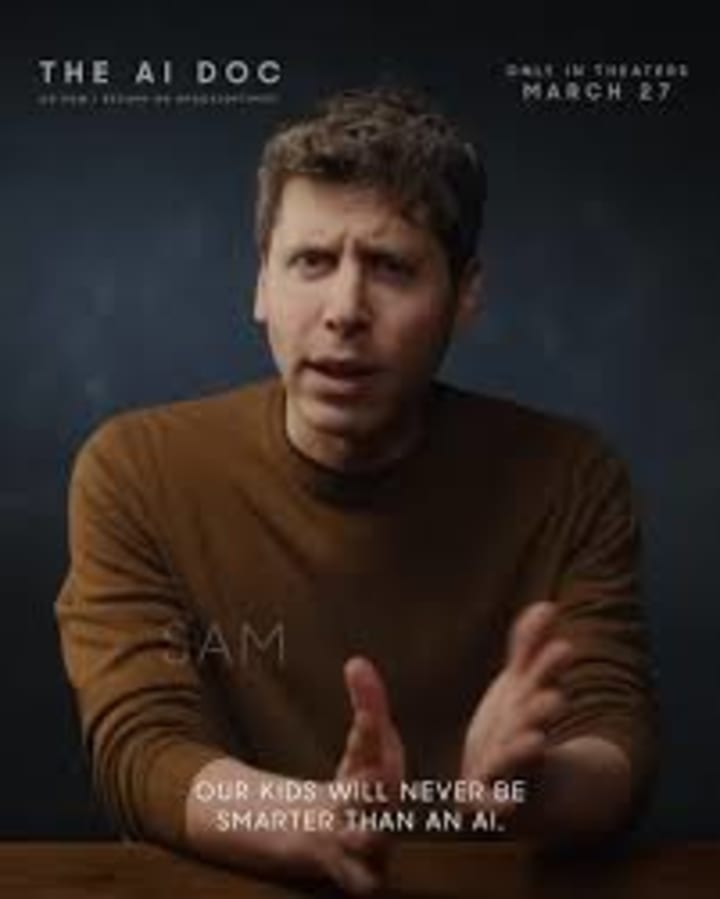
He finds comfort in the fact that Sam Altman is becoming a father.
This is framed as hopeful, but it ignores a crucial truth: billionaires can insulate themselves from the consequences of the systems they help build. Their children will be fine regardless of how the rest of the world fares.
Roher acknowledges skepticism—especially from his wife, the film’s narrator—but never meaningfully wrestles with it.

A.I Isn’t the Solution—People Are
That's the alleged thesis of The A.I Doc, people are the solution to the future of A.I. We have to demand that A.I is good. That's a lovely sentiment, but it's a platitude at best.
A.I doesn’t implement anything.
It can generate ideas, but people have to build, fund, regulate, and execute those ideas in the real world.
A.I can’t perform surgery.
A.I can’t hand you a glass of water.
A.I doesn’t build infrastructure.
Even if A.I “solves” climate change, someone still has to turn that solution into reality.
And that someone is usually a corporation or billionaire whose incentives are driven by profit—not global well-being.
Final Thoughts: A Conversation That Never Gets Real
I admire Daniel Roher’s desire to wrestle with A.I and its potential effects on humanity, but I can’t honestly say he adds anything meaningful to the discourse.
He allows stakeholders—whether optimistic or apocalyptic—to present their views without interrogating the self-interest behind them.
The result is a documentary that talks endlessly about the future while avoiding the present realities that would make that future possible.
It’s not insight.
It’s just… down the stack.

Keywords / Tags
• The A.I. Doc review
• How I Became an Apocaloptimist review
• AI documentary 2026
• Daniel Roher documentary review
• artificial intelligence criticism
• tech industry analysis
• AI and climate change
• Sam Altman documentary
• AI ethics and future
• tech optimism critique
About the Creator
Sean Patrick
Hello, my name is Sean Patrick He/Him, and I am a film critic and podcast host for the I Hate Critics Movie Review Podcast I am a voting member of the Critics Choice Association, the group behind the annual Critics Choice Awards.
Keep reading
More stories from Sean Patrick and writers in Futurism and other communities.
The Fears of AI And How Much Fun It Can Be
ChatGPT has come a long way, as has AI in general. There are those people who are scared of it, and for understandable reasons. People fear that as technologies advance, they’ll be replaced in the workforce. Then, there are the fears that AI could evolve into something that brings us to the brink of extinction.
By The Man Behind The Maskabout 22 hours ago in Futurism
AI in healthcare Statistics and Facts 2026
Based on data from InsightMark Research, Artificial intelligence is now embedded across hospitals, clinics, diagnostic labs, and pharmaceutical research pipelines. The data from 2025 and early 2026 shows rapid adoption, measurable clinical improvements, and growing regulatory attention at the same time.
By Internet News Times3 days ago in Futurism



Comments (1)
Hey Sean! This is an excellent review. I do think that A.I. needs to have a very limited place in our society. It should be more of a supplement, not a replacement.