
Biggest Historical Lies You Still Believe
From the ancient pyramids to World War I, here is the real story behind our past.


Germany started World War I. For over a century, textbooks, Hollywood films, and the Treaty of Versailles have hammered this idea into our heads. The "War Guilt Clause" blamed Germany alone for the global slaughter that began in 1914. But if you look closer at the facts, the truth is much more complicated.
The Great War didn't start because of one man or one country. It was the result of a continent-wide mess of secret treaties, imperial rivalries, and reckless military plans. France wanted revenge for earlier losses and funded Russian troops.
Russia was actually the first great power to order a full mobilization, knowing it would lead to war. Even Britain had secret deals with France while pretending to be neutral.
Germany certainly deserves a lot of blame, especially for invading Belgium. However, the idea that Kaiser Wilhelm II single-handedly started the war was largely Allied propaganda.
It made the harsh punishments of the peace treaty seem fair. History is often written by the winners, and in this case, they simplified a complex global tragedy into a single villain.
Vikings Never Wore Horns
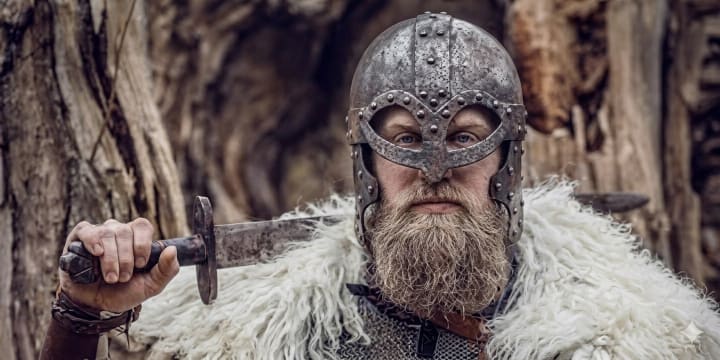
When you think of a Viking, you probably picture a giant man with a horned helmet. You can thank 1800s opera costume designers for that. They added horns to stage outfits for dramatic flair, and the image stuck.
In reality, a horned helmet would be a disaster in a real fight. It gives your enemy something to grab and can easily get snagged on tree branches during a raid. Real Viking helmets were simple, practical, and made of sturdy iron.
Archaeologists have found plenty of authentic gear, and none of it has horns. The "horned" helmets people sometimes find in Scandinavia are actually 3,000 years older than the Vikings and were used for ceremonies, not war.
The Truth About Napoleon’s Height
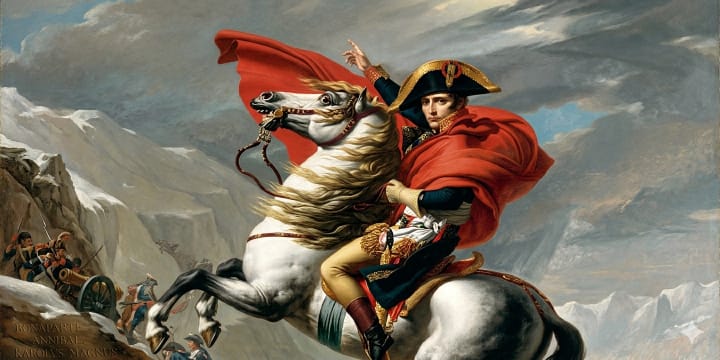
We often hear about the "Napoleon Complex," where short people overcompensate with aggressive behavior. The irony? Napoleon Bonaparte wasn’t actually short. He stood about 5’6” or 5’7”, which was average or even slightly tall for the late 1700s.
The myth started because of a math error. France used a different measurement for inches than Britain did, making his recorded height look smaller on paper. British propaganda artists also loved drawing him as a tiny, angry man to mock him. Standing next to his elite Imperial Guards—who were hand-picked for their height—only made him look smaller by comparison.
The Trojan Horse Might Be a Metaphor
The story of Greek soldiers hiding inside a giant wooden horse to sneak into Troy is a classic. But here is the catch: there is zero physical evidence it ever happened. The most famous versions of the story were written hundreds of years after the war supposedly took place.
While archaeology proves that Troy did burn down around 1200 BC, the horse was likely symbolic. It might represent a siege engine covered in damp horse hides to prevent fire, or perhaps a "seahorse," which was a common nickname for a ship. Some historians even think the "horse" was a metaphor for an earthquake that cracked the city walls, allowing the Greeks to walk right in.
Einstein Was a Math Genius
You might have heard that even Albert Einstein failed math as a kid. It’s a comforting thought for anyone struggling with a calculator, but it isn’t true. Einstein mastered algebra and geometry by age 12 and was doing complex calculus by 15.
The rumor started because of a grading swap. In his school, a "6" was the highest grade, but in other parts of Europe, it was the lowest. When people looked at his report cards later, they thought his top marks were failing ones. He did fail an entrance exam once, but that was because he struggled with French and biology, not math or physics.
Space Views and Great Walls
People love to say the Great Wall of China is the only man-made object visible from the moon. This claim showed up in books as early as 1754—long before anyone had actually been to space.
Astronauts have cleared this up: you can’t see the wall with the naked eye from the moon, or even from low Earth orbit. The wall is narrow and made of materials that blend into the natural landscape. From space, things like desert highways, large airports, and massive dams are much easier to spot.
Columbus and the "New" World
Christopher Columbus did not discover America. When he arrived in 1492, millions of people had already been living there for thousands of years. Even if we only talk about Europeans, Norse explorers like Leif Erikson beat Columbus to North America by about 500 years.
Furthermore, Columbus never even set foot on the mainland of what is now the United States. He spent his time in the Caribbean and parts of Central and South America. He died still believing he had found a shortcut to Asia, which is why he incorrectly called the people he met "Indians."
The Real Culprits of the Plague
For centuries, we blamed rats for the Black Death. We thought they carried the fleas that wiped out a third of Europe. Recent science from the University of Oslo suggests a different story.
When researchers modeled the spread of the disease, the data didn't fit a rat-based breakout. Instead, it perfectly matched the spread of human fleas and body lice. This means the plague moved quickly because people were passing parasites to each other in crowded cities, not just because of rodents in the streets.
Samurai and Their Guns
Movies often show the Samurai as warriors who hated firearms and stuck strictly to the sword. In reality, Samurai were very practical. When Portuguese traders brought guns to Japan in 1543, the Samurai loved them.
They didn't just use guns; they improved them. Japanese gunsmiths created advanced designs, and famous warlords used organized ranks of gunmen to win massive battles. The "anti-gun" image only appeared later during a long period of peace when the government restricted weapons to keep people from revolting.
No One Was Burned in Salem
When we talk about the Salem Witch Trials, we usually imagine women being burned at the stake. This never happened in colonial America. Of the 20 people executed in Salem, 19 were hanged and one was pressed to death with heavy stones.
Burning was a punishment used in Europe—specifically in places like Germany and Scotland—but the American colonies didn't follow that practice. Over time, people mixed up the European history with the Salem stories, creating a myth that stuck.
Roman "Vomitoriums" Weren't for Eating
The popular image of a Roman banquet involves wealthy guests visiting a "vomitorium" to purge their food so they could keep eating. It sounds gross, and it’s also a total misunderstanding of Latin.
A vomitorium was actually a wide exit passage in a stadium or theater. The name comes from the word vomo, which means "to spew forth." It described how the halls could quickly empty a crowd of 50,000 people. It had everything to do with foot traffic and nothing to do with lunch.
The Truth About Life Expectancy
You’ve probably heard that people in the Middle Ages were lucky to live to 30. This is a classic case of a misleading average.
Life expectancy was low because infant mortality was incredibly high. Many children died from disease or hunger before they turned five. However, if a person survived childhood, they had a very good chance of living into their 50s, 60s, or even 70s. People didn't just drop dead of old age at 30; they just had a much harder time reaching adulthood.
The Myth of the Flat Earth
There is a common story that before Columbus, everyone thought they would sail off the edge of the world. In reality, educated people have known the Earth is a sphere since the time of Ancient Greece.
Pythagoras and Aristotle used logic to prove the world was round, and other scholars even calculated its size with shocking accuracy. The "flat earth" myth was actually invented by writers in the 1800s to make the medieval period look more ignorant than it really was.
Slave Labor and the Pyramids
Hollywood loves to show thousands of slaves building the pyramids under the lash of an overseer. However, archaeological finds tell a more human story.
Excavations have found entire villages for the pyramid workers. These people weren't slaves; they were paid laborers, farmers during the off-season, and skilled craftsmen. They had access to good food, medical care, and were even buried in tombs near the pyramids—an honor that would never be given to a slave. They were a respected workforce that took immense pride in their massive project.
About the Creator
Jesse
I just love to write
Digital Marketplaces in Hospitality: The Central Hub Shaping the Future of Hotel Distribution
The hospitality industry is undergoing a major transformation as digital marketplaces take center stage in hotel distribution. Traditional methods, including travel agencies, direct phone reservations, and offline marketing, are no longer the primary channels for reaching guests. Instead, online platforms now serve as the main hub connecting hotels with travelers worldwide.
By Jason Nissen7 days ago in Education
Powering the Future: How Energy, Finance, and Technology Are Shaping Tomorrow
The modern world is being reshaped by three powerful forces working together: energy, finance, and technology. Each of these fields has always played an important role in global development, but today, their connection is stronger than ever. As societies seek cleaner energy, smarter investments, and faster innovation, the overlap among these areas is creating new opportunities and challenges. Understanding how they interact can help individuals, businesses, and communities make better decisions for the future.
By Matthew J Smith6 days ago in Education
The Road by Cormac McCarthy:
"If he is not the word of God, God never spoke." It's a line spoken by The Man, unnamed, early on in the 2007 Pulitzer Prize winning novel, "The Road" by Cormac McCarthy. It's this line, elegiac and moving, infused with despair and hope, that informs you, you're not reading something you'll easily forget.
By Adam Diehl4 days ago in Critique



Comments
There are no comments for this story
Be the first to respond and start the conversation.